The 2025 TIFF Docs Report: Another One for the Road

The 2025 TIFF Docs report: documentary highlights in a year overshadowed by controversy include The Tale of Silyan, Cover-Up, Love+War, A Simple Soldier and Whistle. The post The 2025 TIFF Docs Report: Another One for the Road appeared first on POV Magazine.
The documentaries were great this year at the Toronto International Film Festival, so it’s a shame that a lesser entry in the TIFF Docs slate completely overwhelmed the conversation. The controversy surrounding festival selection The Road Between Us: The Ultimately Rescue makes an ironic flipside to last year’s controversy with Russians at War. Once again, major brouhaha was generated largely by voices that hadn’t seen the film. However, whereas critics of Russians at War ultimately condemned a film that was arguing many of the same points that protesters were making, dissenters for The Road Between Us generally got it right—if inadvertently undermining the conversation by refusing to see the film or, equally likely, not being able to see it. It’s always concerning when people label docs “propaganda” sight unseen.
The Road Between Us ultimately offers a compelling biographic story that’s rendered somewhat toothless by its lack of interest in the larger picture in which the subject—in this case, former IDF general Noam Tibon—finds himself. Director Barry Avrich‘s film is a meticulously researched recreation of emotionally compelling events, but limited in scope. Which is problematic when the central character’s experience that drives the narrative comes from a leadership role in an occupying army and the politics of occupation are inherently part of the horrible events that set the story in motion. It’s also a fair point to observe when so many docs in the line-up do an incredible job of using a character-driven story to ask harder questions about the world at large. (I was able to see all but one film in the TIFF Docs slate, missing only Lucretia Martel’s Nuestra Tierra due to scheduling conflicts/access issues.)

Best of the Fest: The Tale of Silyan
For example, too few words were said in praise of The Tale of Silyan, Tamara Kotevska’s standout in the TIFF Docs programme. This beautiful film, which North Macedonia submitted for Best International Feature and should bring Kotevska back to the Oscars à la Honeyland, finds a striking fable for the global migration crisis in the story of a farmer, Nikola, whose struggle to generate enough revenue from his crops is intimately linked to the fates of storks that populate the region. The film poetically weaves a folktale about a young man who flew the coop and became estranged from his family.
As Nikola’s own family is forced to leave when economic hardship and bureaucracy render their crops unprofitable, the farmer finds echoes in the myth of Silyan. So too do the storks that populate the region, as fewer discarded crops mean the beautiful birds must peck at garbage instead. This intimately observed film creates a moving consideration of environmental and economic interconnectedness with the story of man and animal alike rooted in a thoughtful consideration of the inequalities that capitalism sows. It’s a beauty of a film—a wonder to behold with striking cinematography, poetic storytelling, and a soundtrack rife with avian clucking that warms the heart. It’s the most original documentary of the year and an intimate epic in a mighty field at TIFF.

Focus on Journalists
Especially compelling and illustrative of the strong curation in the TIFF Docs slate led by Thom Powers was the selection of stories about journalists. These films gave topical windows into issues of the day and used personal lenses to interrogate the issues at play, and often the role of reporting itself. TIFF Docs set a strong tone for the festival with the opening night selection of The Eyes of Ghana, Ben Proudfoot’s portrait of Ghanaian cinematographer and national chronicler Chris Hesse. The filmmaker gives his story in an intimate close-up as handsomely restored images from his archive share his work as the official cameraperson for former Gold Coast prime minister and eventually Ghanaian president Kwame Nkrumah. Hesse’s story offers a moving record about the need for visual history and self-representation alike. Hesse’s own complicated relationship to Nkrumah, who was ousted in a coup when public admiration turned sour amid his despotic ways, adds an intriguing element to the film that asks audiences to have a look at the images and make up their minds for themselves.
Also strong was Love+War from festival favourites Elizabeth Chai Vasarhelyi and Jimmy Chin. Their portrait of photojournalist Lynsey Addario is a work of rich and fascinating psychology that explores the photographer’s quest to unearth truths from volatile conflict zones. The doc arguably marks the duo’s best film since their Oscar winner Free Solo and proves positively nerve-wracking as Addario recounts some tensest assignments in retrospect. The film opens up the conversation about the ethics of reporting from wartime by inviting different parties, notably Addario’s family members, to share the emotional and psychological toll of seeing a loved one put herself in harm’s way in the service of telling a story. But as Addario’s compelling photographs punctuate the story, Love+War ultimately presents audiences with a portrait of the crucial choices entailed in any portrait conceived from wartime.
Ditto one of the festival’s standouts, A Simple Soldier from Juan Camilo Cruz and Artem Ryzhykov. The film offers a personal view from Ryzhykov as he chronicles the efforts of Ukraine’s civilian army while they defend the homeland against Russia’s invasion. This brutal and frequently harrowing film thrusts viewers to the front lines of war as Ryzhykov joins the troops with the belief that his camera can be a weapon, but gradually recognizes the fallacy in observing the fight from a remove. The film shares one of the best looks at the war in Ukraine to date with Ryzhykov’s engaged consideration of the ethics of passive viewing in conflict, but also the complexity of trying to hold the camera while becoming an active participant in the story one documents.

While A Simple Soldier marks one of the more radical works at the festival, the tried-and-true format of the talking heads film does journalism right in the festival’s most conventional doc Nuns vs. the Vatican. The film directed by Lorena Luciano admittedly follows the same format of virtually every documentary about the #MeToo movement, but it proves that an interview-driven film remains an effective tool for giving a platform to voices that have been silenced. It’s a harrowing account of women bringing to light allegations of sexual abuse in the Catholic Church. Luciano admirably gives a spotlight to the story told in tandem by journalists like Federica Tourn and Lucetta Scaraffia while furthering their efforts.
Standing tallest amid the field of journalism docs, however is Cover-Up with its prickly biography of veteran journalist Seymour Hersh. This doc portrait by Laura Poitras and Mark Obenhaus arguably offers the most thorough biographical work of the bunch and marks a worthy follow-up to Poitras’ All the Beauty and the Bloodshed. It features a fine meeting of the minds with investigative journalist Hersh offering a cantankerous subject for Poitras, whose own filmmaking bears an indebtedness to his dogged pursuit of truth, justice, and a very good story. Cover-Up, like Love+War, invites the journalist to reflect upon some of his biggest breaks, including the story of the My Lai massacre and incidents of torture at Abu Ghraib prison. Moreover, as Hersh butts heads with the filmmakers and displays discomfort over being asked the questions, rather than being the one to pose them, Cover-Up finds a laudable window into the gold standard for journalism. Hersh’s combativeness frequently reflects his unshakable protectiveness when it comes to sources.
Colourful Characters
While Hersh, Addario, Hesse, and Ryzhykov are among the most memorable figures of the TIFF Docs slate, the festival also featured several eccentrics who made for great stories. Another doc that bridges both aspects is the acclaimed Put Your Soul on Your Hand and Walk, Sepideh Farsi’s portrait of late Palestinian photojournalist Fatma Hassouna. The film offers one of the more challenging titles in TIFF Docs, as Farsi chronicles her phone calls with Hassouna entirely via Face Time calls recorded with her own phone. The aesthetic leaves much to be desired, but ultimately grows on a viewer with its ability to capture the sheer difficulty of reporting from Gaza. The calls also serve as a poignant reminder of the power of connection as they offer Hassouna a lifeline by showing her that the world still cares about her plight.
Equally sobering is Zahraa Ghandour’s Flana, about the plight of Iraqi women, which finds in protagonist Hayat a snapshot of a nation’s heartbreak as women are discarded by violence both literal and systemic.
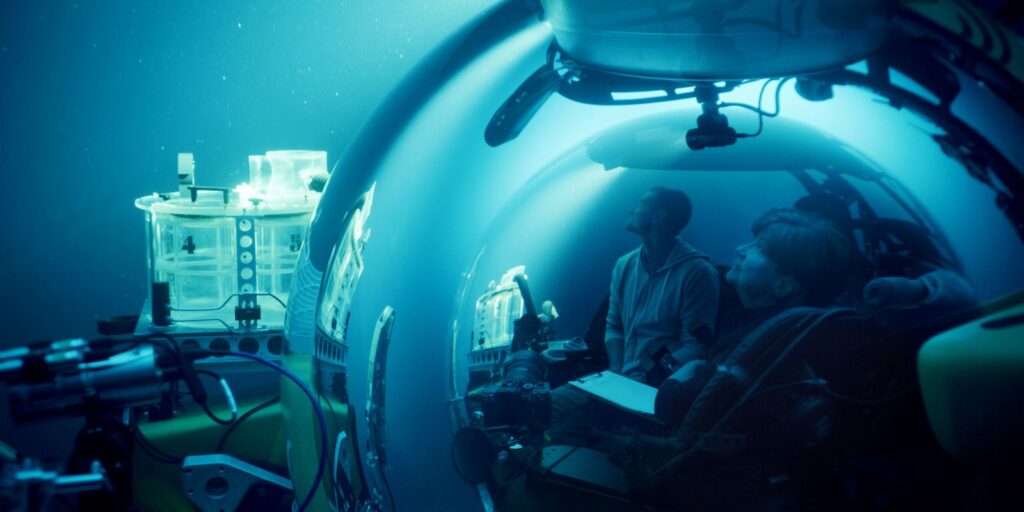
Alternatively, the line-up has a well-matched set for characters and form in the high-flying adventure of The Balloonists and the deep dive of A Life Illuminated. The docs take audiences above the clouds and to the deepest corner of the ocean, respectively, with idiosyncratic scientists pursuing their passions. The former shares an archival odyssey with aeronauts Bertrand Piccard and Brian Jones during their historic non-stop flight around the world in a hot air balloon. The latter imparts the research of Dr. Edie Widder, who pioneered breakthroughs in bioluminescence to illuminate the underwater world. The docs by John Dower and Tasha Van Zandt, respectively, are among two of the festival’s big screen adventures that make the case for docs in the theatrical space at a time when most non-fiction work struggles to find much life outside streaming.
Other memorable figures driving stories in TIFF Docs include disgraced celebrity cook (not “chef”!) Paula Deen in Canceled. This profile doc from Billy Corben (Men of War) may have been the trickiest TIFF Docs title to swallow, but it finds its rewards in the conversation it invites. Canceled lets Deen and her sons give their side of the story after the Food Network star had a quick fall from grace when a bizarre lawsuit charged her with racism and she was subsequently crucified in the court of public opinion. Narratively, Corben’s film is a bit of a mess, jumping around in time and switching gears whenever the conversation gets too dicey, but its final act features an especially strong conversation starter about truth-telling and the power of the mob.
Canceled digs into the truly strange nature of Deen’s downfall by showing how the lawsuit was, by all objective analysis, pure extortion with a white woman accuse the cook of racist practices. The film tells how the story ballooned when Deen answered truthfully in her deposition, saying “Yes, of course,” when asked if she ever dropped the N-word in her life. On one hand, viewers may be uncomfortable with a portrait that feels like (sorry) whitewashing and a self-serving bid for redemption. On the other, the film’s strength may be the discomfort it inspires by raising the question of whether Deen deserves forgiveness what may be an ill-defined transgression from the distant past. When Corben finally gets to the meat of the case, the doc shrewdly flips the power of cancel culture back upon a viewer, inviting one to cast a stone against Deen or feel empathy due to all the baggage and preconceptions one brings to the story. It all depends how much weight one gives to Deen’s words, “of course”: Is Deen a racist or just an honest Southern girl who grew up in the 1950s?

While Deen marks one of the juicier characters at this year’s festival, no documentary boasts as colourful a cast as Whistle. Director Christopher Nelius delivers an instant crowd-pleaser with this highly entertaining look at competitive whistlers. The film finds an eccentric bunch including competitor Molly Gordon and Masters of Musical Whistling founder Carole Anne Kaufman. Whistle offers a delightful snapshot of a community brought together by a shared passion. It is deadpan hilarious as Nelius weaves between the competitors, treading Christopher Guest territory without making light of their drive to succeed. Whistle proves that competition docs can still surprise viewers with the winning combination of novelty and personality, which this doc delivers in spades.
Masters of the Form
TIFF goers had good reason to put their lips together for two regulars in the series, Raoul Peck and Gianfranco Rosi. The former was back in Toronto with Orwell: 2+2=5, a timely consideration of the longevity of George Orwell’s writing and its prescience in the age of Trump and, AI, and fake news. Orwell may be among the most didactic titles of the slate and follows Peck’s methodology from James Baldwin doc I Am Not Your Negro with less success, but it’s a compelling and treatise on media literacy. It’s hard not to feel fired up and appropriately angry.
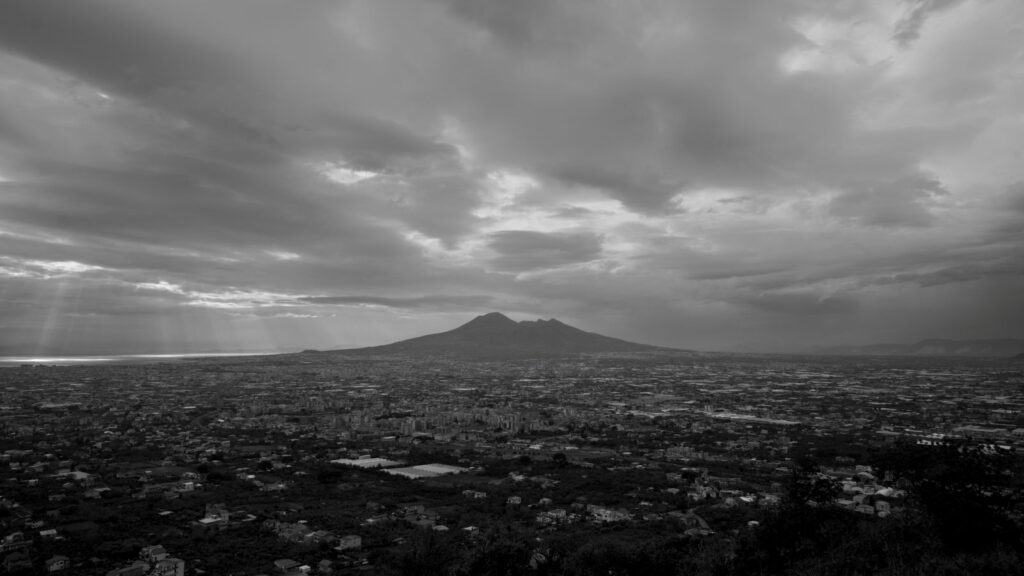
Rosi, meanwhile, arguably has one of the stronger films of his career with Below the Clouds. This exquisitely shot observational film closes the triptych of his portraits of Italian life, which began with Golden Lion winner Sacro Gra and Golden Bear winner Fire at Sea. The films only have a loose thematic link, so one can easily appreciate this look at Naples under the shadow of Mount Vesuvius. Rosi’s roving camera captures the history and eccentricity of an area with a great legacy for death and destruction. Particularly amusing are the moments when he checks in on the fire department and audio calls from cranky and/or lonely Italians overlay the vérité footage as emergency responders reassure their neighbours about the volcano, or simply offer a compassionate ear for whatever ills the callers need to vent. This is a rich and wise exploration of the many layers of history that inform the land.
Another striking cinéma vérité is Sky Hopinka’s Powwow People, a slice of life doc that observes a powwow ceremony over the course of what feels like a single day. (Hopinka shot three days but edited as one.) It’s an immersive portrait that covers the ceremony from all angles and uses the power of durational cinema in a daring final act that captures a dance-off competition in one 30-minute long take.
Experiments at Wavelengths
Hopinka’s ambitious project could have easily found an audience too in TIFF’s Wavelengths programme, the experimental stream that was controversially truncated this year. (Although for all the noise about the programme being shortchanged, Wavelengths remains a very tough sell to get writers to deliver during the festival.) This year’s Wavelengths again brought great rewards for audiences willing to venture into the unknown. Among them was Kamal Aljafari’s With Hasan in Gaza, a fine feat of durational cinema that complements Hopinka’s portrait of daily life. This sedate vérité work dusts off the filmmaker’s tours from Gaza circa 2001 as he travels the city in search of a friend he met in prison. The vignettes offer a glimpse of life under occupation and what it means to have settler violence normalised through routine surveillance and shelling. It’s an effective window that captures the complexity of life in the region through the deceptive simplicity of its design.
Alternatively, the long-awaited Canadian premiere of Kahlil Joseph’s BLKNWS: Terms and Conditions, confirms a daring odyssey that defies categorization. Joseph serves a shape-shifting cinematic essay/encyclopedia about the titular Black-owned news outlet, buttressed with layers upon layers of history of Black experiences and forms of expression. It’s a revitalizing collective portfolio that builds upon historical surveys by the likes of W.E.B. DuBois and contemporary takes by cultural commentators and academics, sandwiched between dramatic threads aboard a travelling art show on a boat. It offers a reclamation of history and look to the future with an energetic assertion of life and legacy. The film’s audacious flair speaks to the power of crafting narratives and sharing points of view.
Similarly, historical voices artfully collide with the present in Maureen Fazendeiro’s The Seasons, an ambitious hybrid film that draws upon the diaries of German archaeologists Georg and Vera Leisn. Fazendeiro observes hands that work the land in Portugal’s Alentejo region. The picturesque land has historical significance as a site of ancient megalithic structures, but now mostly serves as a countryside where goats roam as they please. In some ways complementing Rosi’s Below the Clouds, Fazendeiro’s consideration of the rich layers of history explores intimate connections between a land and its inhabitants. Both films offer archaeological digs, literally, metaphorically, and cinematically with The Seasons adding a twist of folklore to evoke the ways in which we narrativize history.
And, although it was a drama (and we won’t fault them for that), Wavelengths arguably delivered the best Canadian film of the festival with Levers, Rhayne Vermette’s refreshingly original addition to the canon of wacky Winnipeggiana. The sophomore feature confirms that Vermette is one of Canada’s sharpest talents, both as a director and cinematographer on the heels of Agatha’s Almanac, which she shot. Levers imagines a world where the sun disappears and Vermette conjures images rich with textures and dimensions. Cameras generally serve as tools for harnessing light, but her ability to create a sensory odyssey by capturing darkness makes for a thrilling experience. Few films offer such a wonderful sense of discovery.
Canadian Highlights
The TIFF team arguably could have beefed up the Wavelengths slate by shifting two works from the TIFF Docs side over to the experimental programming. Darlene Naponse’s sumptuous Aki is a Wavelengths film if there ever was one. It’s a striking cinematic essay that pensively observes the changing seasons in the northern Ontario region of Atikameksheng Anishnawbek. Told with nary a word, it’s a soothing odysseys that invites a viewer to settle in and find harmony with nature as Naponse’s camera soaks up the sun. The film builds a compelling environmental fable as it watches the seasons change and the landscape encounter swathes of violence from industrial development.
Also inspiring TIFF goers to expand their minds and embrace the strange was Peter Mettler’s seven-hour opus While the Green Grass Grows. The doc, which doesn’t demand a single sitting and probably plays better if one watches the seven chapters separately and marinates in them a little, sees the master in top form. This is an appropriately expansive consideration of time, place, and history as Mettler observes the final days of both his parents, considers the isolating grip of the COVID-19 pandemic, and confronts his own mortality. All of life’s big questions are here, but the answers are up to you.
A sense of adventure fuels Canadian highlight Still Single, Jamal Burger and Jukan Tateisi’s offbeat portrait of Toronto’s omakase chef Masaki Saito and the workaholism that fuels his Michelin-starred success. The film has a great sense of play, but also boasts a complexity of flavours as it asks audiences what they’re willing to sacrifice to further their careers. Alternatively, the complexity of sex work gets simplified somewhat in Modern Whore, a spirited portrait of former escort Andrea Werhun. The film makes a great case to consider sex work as labour, but it’s undone by its flippant tone and false equivalencies.
Alternatively, Min Sook Lee strikes the right balance in There Are No Words as she confronts her family history in a disarmingly personal way. The film unpacks a dark family legacy without a hint of sentimentality and offers a thoughtful window into the many untold stories of families who landed in Canada in search of a better life, but carried the weight of the past and passed it on to the next generation.
A reckoning of the past also comes in the complementary docs True North and Ni-Naadamaadiz: Red Power Rising, directed by Michèle Stephenson and Shane Belcourt, respectively. Both docs spotlight fearless activists with True North considering a turn in the Black Power movement and Ni-Naadamaadiz offering a snapshot of a galvanizing moment for Indigenous rights. The docs admirably salute key figures in the fight for change while rallying energy for the next generation to carry the fight.
Art and Culture Docs
Finally, the docs at TIFF boasted some highlights for Canadian pop culture stories, including John Candy: I Like Me, which broke the opening night curse, but saw the beloved comic ironically eclipsed by Godspell yet again. Candy’s documentary features many of the same voices included in You Had to Be There, which revisits the 1972 Toronto production of Godspell the proved a breakthrough for seemingly everyone on the Canadian comedy scene but John Candy. The uproariously funny You Had to Be There lands a winning gamble as it looks back upon an event from which few archival recordings are thought to exist, building instead an oral history of a comedy scene coming into being.
Oral histories also fuel Degrassi: Whatever It Takes, Lisa Rideout’s salute to the landmark Canadian TV franchise, and Lilith Fair: Building a Mystery, Ally Pankiw’s retrospective of the breakthrough festival for women in music. Both films are handsomely assembled culture docs with the latter hitting CBC Gem on September 17, surprisingly forgoing the theatrical experience that it seemingly demands.
Pankiw’s lovingly assembled film is a textbook music doc that hits all the right notes, and in some ways offers a troubling snapshot of the state of documentary emerging from this year’s festival. If the industry seemingly demands music docs and celebrity fodder, Lilith Fair is exactly the kind of doc that should be doing gangbusters at the cinemas. When a fellow music doc like the euphorically electrifying EPiC: Elvis Presley in Concert had TIFF goers dancing in the aisles—and POV contributor Rachel Ho attending all five screenings of the doc throughout the festival—but is still without a distributor, that’s concerning. The runner-up for the People’s Choice documentary prize arguably emerges from the festival as one of its word of mouth hits, but also most laudable cinematic feats for its energetic and lovingly restored portrait of the King in action. If even Elvis can’t find a home, what hopes do the other docs have for reaching audiences outside the festival circuit?
Get all of POV’s TIFF 2025 coverage here.
The post The 2025 TIFF Docs Report: Another One for the Road appeared first on POV Magazine.
Related Articles
Visions of the Croisette: The Ultimate Prediction for the 2026 Cannes Film Festival Main Competition
Caught between streaming algorithms and geopolitical upheaval, does cinema’s “sacredness” still matter? A Los Angeles–based team predicts the 22 Palme d’Or contenders for Cannes 2026—from PTA and Östlund to Panahi, Rohrwacher, and beyond.
The Memory Palace: Or, If These Walls Could Talk
How films like Okuirmono, The Nest, and This House explore the histories embedded within the walls of our family homes. .
Exposing the Dark Truth of Digital Totalitarianism: Documentary 'Eyes of the Machine' Arrives in Prague as One World Film Festival Opens
Following its acclaimed premiere at IDFA Amsterdam, investigative documentary Eyes of the Machine screens at One World International Human Rights Documentary Film Festival in Prague, with Uyghur witness Kalbinur Sidik attending in person.