Pyrrhic Victories: Stories from Palestine and Israel

Documentaries reflect stories from Israel and Palestine with varying struggles to be seen and heard--and to satisfy everyone amid the culture wars. The post Pyrrhic Victories: Stories from Palestine and Israel appeared first on POV Magazine.
Believe it or not, there’s opinion polling in Gaza. The Palestinian Centre for Policy and Survey Research, Artis International and behavioural scientists based at the London School of Economics have conducted regular polls since October 7, 2023. The findings are perplexing. As late as March 2024, 71% of Gazans approved of the October 7 attacks; six months later, only 39% did so. Support for Hamas is even more contradictory. Immediately after October 7, 42% of Gazans said they supported Hamas; this has now halved to 21%, with a strong plurality of Gazans (32%) saying there is no political organisation that reflects their interests. Still, no other political faction has overtaken Hamas; support for Fatah is at an abysmal 14%. And how do Palestinians define their interests? There is overwhelming support for the right to return (90%) and self-determination (86%). Conversely, there is almost no support for a one-state solution with equal rights for Jews and Muslims (5%); about 25% of Gazans support the creation of a sharia-law state and continued strong opposition to Israel. A plurality believe that Hamas will remain in control of Gaza after the war is over, even if only a fifth of the population still supports them.
For its part, Israeli opinion polling is downright bloodthirsty. In a poll in March 2025 following the resumption of Israel’s bombardment of Gaza, nearly 60% of respondents supported the return to war. Prime minister Benjamin Netanyahu, subject to an anti-corruption investigation and widespread protests right up until the October 7 attacks, now enjoys an overwhelming plurality of support with 47%, 30% over his nearest rival, Benny Gantz.
Behind the opinions there are the facts. 1,200 Israelis killed by Hamas on October 7. 50,000 or more Palestinians killed by the Israel Defense Forces (IDF) since then.
Do these numbers speak for themselves? Yes and no. First, emphatically, yes. As Peter Beinart—once a Zionist neocon, now a reconstructed progressive—wrote in The Guardian, “Israel’s assault on Gaza became excessive on 9 October, when it cut off food and electricity to everyone in the Strip.” Yet, unbelievably, this is a minority position. Israelis and Zionists around the world clearly believe they haven’t yet had their revenge, and a majority of Western governments seem to agree—certainly enough to keep arming them. This belief must rest on some other interpretation of the facts, one in which Israelis are still the aggrieved party.
The whole history of the Israel-Palestine conflict is rife with these impasses—Rorschach blots, Rashômon effects, duck-rabbit illusions. Palestinians: dispossessed peasants or irredentist terrorists? Israelis: heroic defenders of a hard-won, God-given state or genocidal fascists? There is no claim either side can make that the other can’t immediately gainsay. Did Jews and Arabs live together peacefully in pre-Nakba Mandatory Palestine? Or were the Arabs Hitler-admiring crypto-fascists waiting for an opportunity to drive out the Jews, and the Jews likewise settler colonists nursing hopes of a Jewish ethno-state? Did the Israelis violently evict the Palestinians in 1948, massacring defenseless villagers along the way, or did the Palestinians leave of their own accord? (It was the former, but you can’t say that in Israel without suffering serious consequences.)

Was Ehud Barak, Yasser Arafat, or even Bill Clinton responsible for the failure of the 2000 Camp David talks? Implying that anybody but Arafat alone was responsible used to be anathema in the US and Israel, though joint responsibility is now widely if not uniformly acknowledged. Was Ariel Sharon’s unilateral disengagement from Gaza in 2005 a betrayal of the Israeli right wing’s Greater Israel dreams, a consolidation of those dreams in the West Bank, a trap laid for the Palestinians by handing them control of an unviable territory, a way to signal goodwill toward the peace process, or a way to delay it indefinitely? Are Hamas the ultimate antagonists of Israel or, as suggested in The Bibi Files, mere useful idiots for Netanyahu?
Millions of lives are at stake in how these questions are answered. Yet answers come less from a place of reason than from ideology and emotion.
Out in front of the facts and opinions, and largely bypassing them as ideological heuristics, there are the images. We’ve been inundated with them since October 7. Hamas militants pouring through the border fence. Israeli corpses at the Nova festival and kibbutzim. Gaza destroyed—for the nth time. Portraits of Israeli hostages plastered around Western cities. Ceasefire protests and encampments on university campuses. Shaban al-Dalou burned alive while donating blood in a Gaza hospital bombed by the IDF. Yahya Sinwar throwing a stick at an Israeli drone that is about to kill him. Hamas’ cruel spectacles: Israeli corpses paraded through Gaza, mislabeled coffins of murdered hostages. The insane AI Trump Gaza video.

What role can documentaries play in this morass of fact, fiction, image, ideology, emotion? Can they contend in this crowded, heated, polarised discursive landscape, circumscribed by violence, ostracism and censorship, in which everybody already knows what they believe and has a ready counter for any argument?
I’ve noticed two general approaches in documentaries about the Israel-Palestine conflict: the activist and the authoritative. The former, usually produced by young Palestinians and Israelis (or American Jews), tend to focus on individuals or small groups and limited milieux (often the filmmakers themselves), and present definite arguments about how to interpret the conflict. The latter, often made for TV, are in the familiar talking heads-plus-archival footage-plus-voiceover mold. They are archetypal well-made docs that give screen time to various perspectives on historical events while carefully avoiding pinning themselves down to any single interpretation.
Both approaches are rewarding. Yet there is hardly a single film on this topic—no matter how nuanced and evidenced its claims, how balanced its approach, how sturdy its filmmaking, how sincere its desire for peace—that hasn’t faced ideologically rooted condemnation. It’s enough to make you question the entire enterprise of political documentary film.
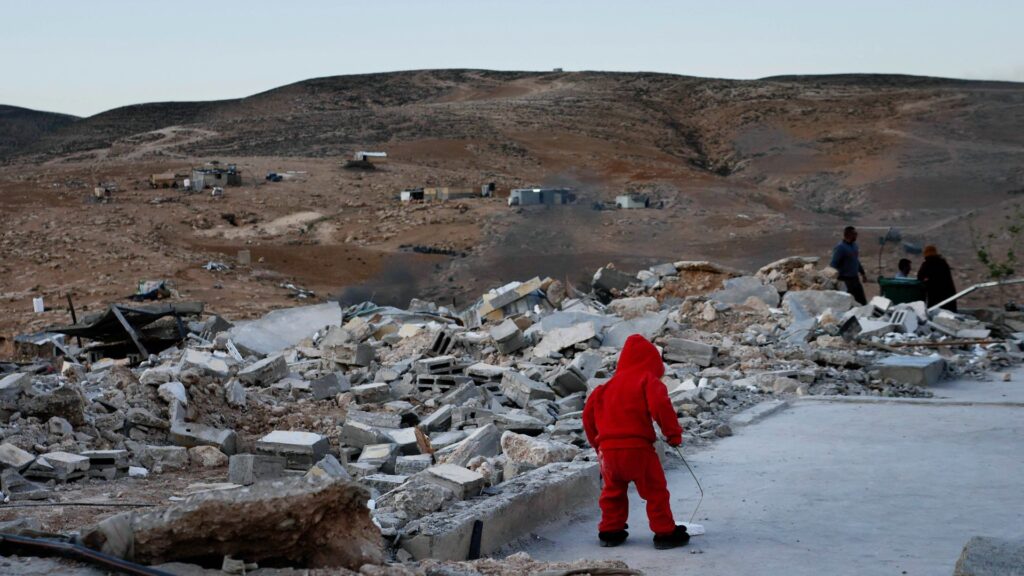
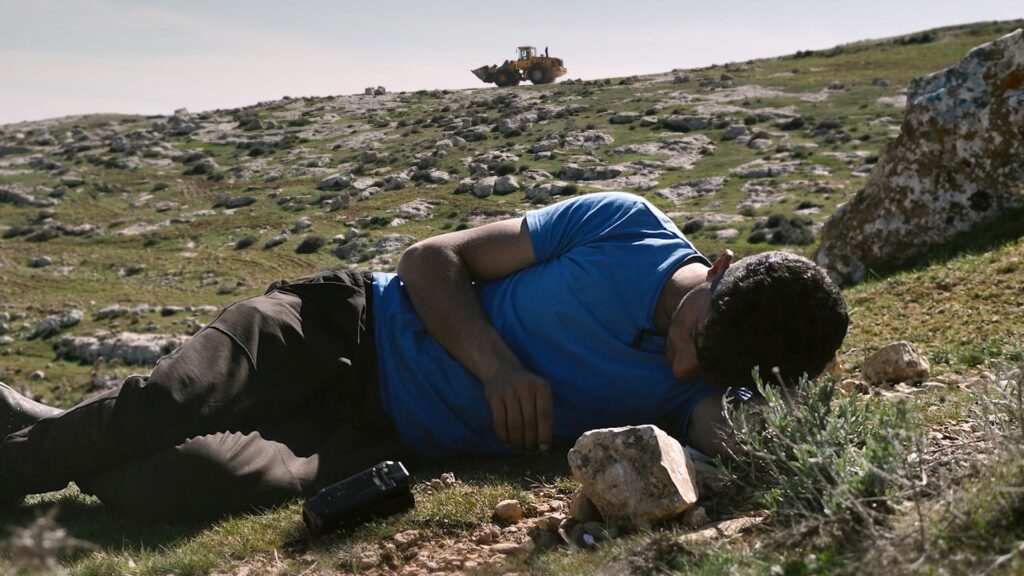
No Other Land is the paradigmatic case of the schizophrenic reception that has met these documentaries. A rare instance of Palestinian- Israeli collaboration, the film documents the lives of the occupants of the West Bank villages that comprise Masafer Yatta in a cycle of demolition and reconstruction: Israeli soldiers and settlers demolish their houses, the Palestinians rebuild. Tender moments between grandmother and granddaughter, political debates between uncles and nephews, children dancing, cousins joking around, suddenly give way to attacks by Israeli military and settlers. It’s astonishing to see the filmmakers, alongside the community, rush to confront them with their cameras, their voices, their bodies. Even this cynic must admit that this is genuinely heroic footage.
Yet, over and above simply humanising the Palestinians and demonstrating the inhumanity of the Israeli settlers and army, the film also questions the value of activism—including its own—in the face of such intransigence. Some of the best parts of the movie focus on the relationship between two of the film’s directors, the Palestinian Basel Adra and the Israeli Yuval Abraham. Smoking hookah, eating shawarma, scrolling on his phone, Basel talks openly of being depressed, bored, hopeless. If the film’s first point is to provide evidence—if only people knew what’s going on here, they wouldn’t stand for it—its second point is to question the utility of evidence in an ideologically rigged system. In one scene, Basel tells Yuval to get used to failing.
In spite of No Other Land’s irreproachable politics, its reception has been polarised, indeed deranged. It deservedly won the Oscar for Best Documentary, but it lacks US distribution. It won two awards at the Berlinale, even as its filmmakers were denounced as antisemitic by German officials. Yuval received death threats. Adra was attacked by Israeli settlers. In March 2025, Hamdan Ballal, one of the Palestinian directors, was also attacked and severely injured by Israeli settlers, arrested by soldiers and held in a police station overnight. “Nobody can do anything to stop the pogroms, and soldiers are only there to facilitate and help the attacks,” Basel told The Guardian.
Bizarrely, following the film’s Oscar win, a Boycott, Divestment and Sanctions group has also denounced it as violating “anti-normalization principles,” even as other Palestinian groups have pushed back against that assessment and continue to stand by the film.
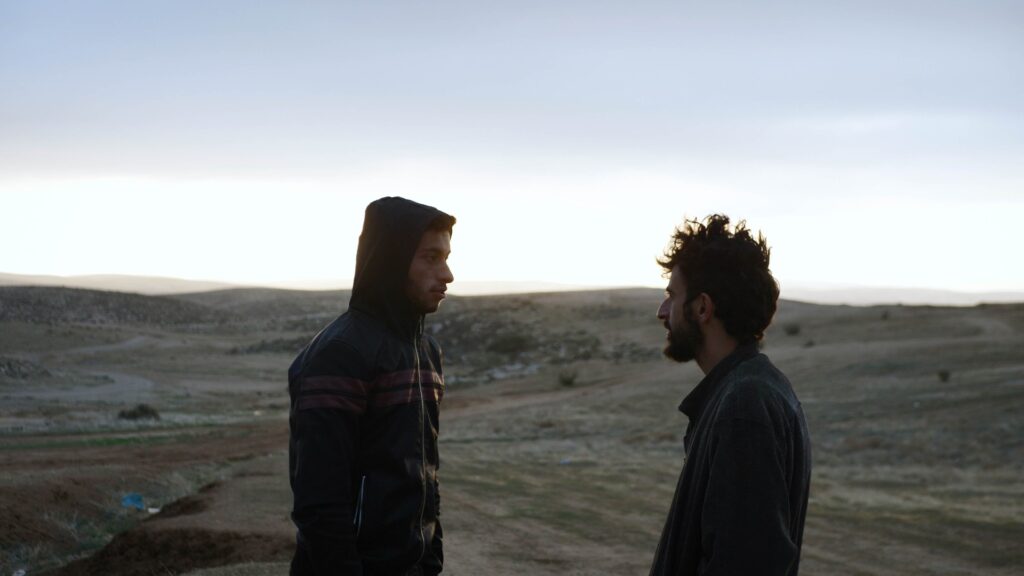
The case of Israelism is similar. A film about two millennial American Jews on political journeys from Zionism to anti-Zionism as they grapple with the existence and oppression of Palestinians—studiously ignored by the Jewish education system in the US (and Canada)—it addresses a widening generational divide in the American Jewish community regarding Israel, with younger people increasingly uncomfortable about their complicity in Israeli apartheid.
A major focus of Israelism is the Birthright programme, which sends young Jews to Israel to tour the country and hopefully meet a nice young Israeli with whom to procreate. Even though I knew many people who took this trip—I tried unsuccessfully to dissuade them—it was only after October 7 that I fully realised how central Israel is to organised Jewish communities around the world. It was also around then that I became aware of the Yiddish term doikayt, which means “hereness,” and expresses the opposite view: that Jews are fundamentally diasporic. This is not a minority view, though it often seems to be. As progressive rabbi and scholar of Jewish philosophy Shaul Magid concludes in his aptly-titled book The Necessity of Exile, completed just before October 7 and published in November 2023, “seventy-five years since the founding of the State of Israel, the case for maintaining, and in some cases even cultivating, an exilic ethos and existential posture is more necessary than ever.”
In spite of the fact that it is arguing a case that has a solid basis in Jewish tradition, Israelism, too, has been roundly condemned—by the very people it is trying to convince. After October 7, screenings of the film were cancelled at the University of Pennsylvania, Hunter College, and in Hamilton, Ontario. The film finally screened at Hunter but the post-screening discussion moderated by Rabbi Andy Bachman descended into chaos. Bachman claims that he wasn’t allowed to ask any questions before protesters shouted him down; the filmmakers dispute this account and say his questions—which, according to them, he did ask—were adversarial and irrelevant, and that he ignored questions from the audience. Another Rorschach blot.
The list goes on. Most films have had screenings canceled. Most filmmakers have been threatened with violence. The BBC recently pulled a documentary after broadcast upon the revelation from dutifully shocked and appalled independent journalists that the 13-year-old boy at its centre is the son of a minor agricultural official in the Hamas government in Gaza. (De rigueur handwringing aside, one wonders how many people in Gaza could possibly not be connected to Hamas at this point. They’ve been in government for almost two decades, and given the lack of a functional economy in the open-air prison that is Gaza, most people who manage to survive are probably linked to their patronage network.)
The censorship extends to the media. The Guardian took the highly unusual step of taking down in toto a published review of the Channel 4 documentary One Day in October, a harrowing film about the October 7 attacks in Kibbutz Be’eri featuring interviews with survivors, livestreamed footage taken by Hamas as they broke through the Gaza- Israel Wall, gruesome CCTV footage of the attacks and even terrifying calls and texts made by kibbutz residents holed up in their useless bunkers. Readers denounced the article for expressing sympathy toward Hamas. In reality—judging from the few quotes still floating around online—the review just criticised the film for not exploring Hamas’ motives, instead portraying them as pure incarnations of evil. It’s a subtle and difficult point to make, but an important one. But apparently we’re not allowed to be curious about that.
This whole sorry tale is a microcosm of the wider tensions between free speech and its enemies. Documentary film presupposes an audience willing to engage with it in good faith, to open itself to seeing different and uncomfortable realities, to critically evaluate the way the filmmakers choose to present those realities aesthetically and rhetorically, and to derive conclusions that may differ from what they thought before they saw the movie: a liberal audience. Documentary audiences have lived up to those ideals—hence the widespread celebration of the films in question here. Everybody else has abysmally failed to do so. The influence of Zionist pressure groups in the US, “memory culture” in Germany, and similar anti-antisemitic ideologies around the world dictate a performance of ritual blindness to Israeli crimes and Palestinian suffering. They conflate criticism of Israel with antisemitism to an Orwellian extent—even Jews are not immune. To a lesser extent, the inverse is also true. I have read some deeply unfair critiques of the three-part BBC documentary series Israel and the Palestinians, which narrates the history of the Israel-Palestine conflict from 2005 until the October 7 attacks, from pro-Palestine perspectives.
Years ago I had occasion to take the measure of this kind of ideological extremism. I was at a party in Toronto with a bunch of Israelis who had recently served in the IDF and were intent on explaining to us naïve Canadians that Palestinians aren’t people, you understand: they are terrorists, rats, cockroaches. A harrowing anomaly at the time—what were these fascists doing in the Annex?—has proven in the ensuing decade to be a harbinger of an even more harrowing norm. It’s not just free speech that’s under attack but all humane values down to the most fundamental: seeing humans as humans.
Can the Israel-Palestine Rorschach blot be transcended? Here’s challenge: to hold in our heads two contrasting images at the same time—one of the villagers of No Other Land, one of the Hamas fighters of October 7. There is a group of Palestinians who mourn the loss of their ancestral homes and territories and want nothing more or less than to get them back and be left in peace. Then there’s another group for whom control of the Al-Aqsa mosque in Jerusalem is a red line and are willing to sacrifice the peace process if they don’t get it. In a review of the work of Palestinian artist Jumana Manna, Kaleem Hawa named the first tendency “peasant politics.” This sits very uncomfortably with the jihadi extremism of Hamas. The former are the “perfect victims” that enamour documentary audiences, and for good reason—their cause is just. The latter are hard to countenance.
Do pro-Palestine films, which almost always depict Palestinians as peaceful peasants, have a duty to address and repudiate the prevailing image of Palestinians as terrorists? No Other Land comes close in a scene in which Basel asks Yuval what he would do in Basel’s situation, and Yuval admits that he doesn’t know. But it could go further.
In this, Eqbal Ahmad could serve as guide. Ahmad was a Pakistani activist who worked alongside Frantz Fanon—the chief theorist of violence as anti-colonial strategy—for the last six months of Fanon’s life, toward the end of the Algerian War. Ahmad explained why National Liberation Front tactics of terrorist insurrection, which worked in the Algerian case, could not work in Palestine. It’s quite simple. The goal of anti-colonial violence is to drive the enemy away. This means it only works if they have somewhere they can flee to. The pieds-noirs had somewhere to go, and nearly all of them—around 800,000, similar, oddly, to the number of Palestinians ethnically cleansed during the Nakba—fled back to France between 1962 and 1964. Where are 7 million Jewish Israelis supposed to flee to? In the absence of such a place, Ahmad pointed out, insurrection just forces Israel to become ever more militant and oppressive.
Ahmad pointed out that violence had to be part of a wider political campaign to delegitimise the colonial overlord. Pro-Palestine activists have been trying to replicate this over the past two decades through means both non-violent—the BDS movement and the language of Israeli apartheid, largely targeted toward Western audiences—and violent, through the October 7 attack, which Hamas assumed would be supported by Hezbollah, Iran, Arab countries in the region, and Palestinians in the West Bank. Has it worked? Not really. BDS, politely applauded by Western biens-pensants (while also excoriated as antisemitic by Western Zionists), has only radicalized the Zionist movement. Over the past 18 months since October 7, itself coming two decades into the BDS movement, pro-Palestine protests and encampments have abounded, but all Western governments still back Israel. Similarly, no Hamas allies emerged to join the fight, not even in the West Bank. Violent resistance is literally suicidal. It’s entirely likely that, after all is said and done in the current war, the political situation will look a lot like it did on October 6.
The brutal irony is that Israel’s violence has the same goal as that of the Palestinians—ethnic cleansing—and is just as doomed, since the Palestinians, too, have nowhere to go. No other land indeed.
Obviously, this isn’t to excuse either Israel’s or Hamas’ actions. But it does help to explain them.

Notably muted is any significant public internal criticism on either side. The Zionist position is that the Palestinians just need to stop attacking Israel and then peace will be possible. What they don’t say is that Israel should stop demolishing Palestinian villages, stop expanding settlements, take down the checkpoints—in other words, that Israel should stop harassing Palestinians, clearly provoking them in order to punish them. (Again, curiosity about Hamas’ motives is anathema.) From the Palestinian side, there is also reticence to criticise Hamas, even though its tactics are clearly wrong. I’m given to understand that the anti-Hamas protests that erupted in Gaza in March stop short of disavowing violent resistance; they just don’t think Hamas is the right vehicle for it.
All this nightmarish realism makes one daydream about alternatives—what else could have been, or still could be. Lyd, a sci-fi/ documentary hybrid, interweaves a documentary about Palestinian refugees from Lyd (now called Lod) with an alternate history, related in animated sequences featuring some of the same subjects as in the documentary sections, in which the Nakba never happened. Lyd depicts a pre-Nakba world of relative peace and coexistence—home to Arabs and eventually Jews, Lyd hosted Palestine’s only international airport and was a pilgrimage site for Egyptian Christians—and contrasts it with the violence and erasure of the Israeli apartheid state.
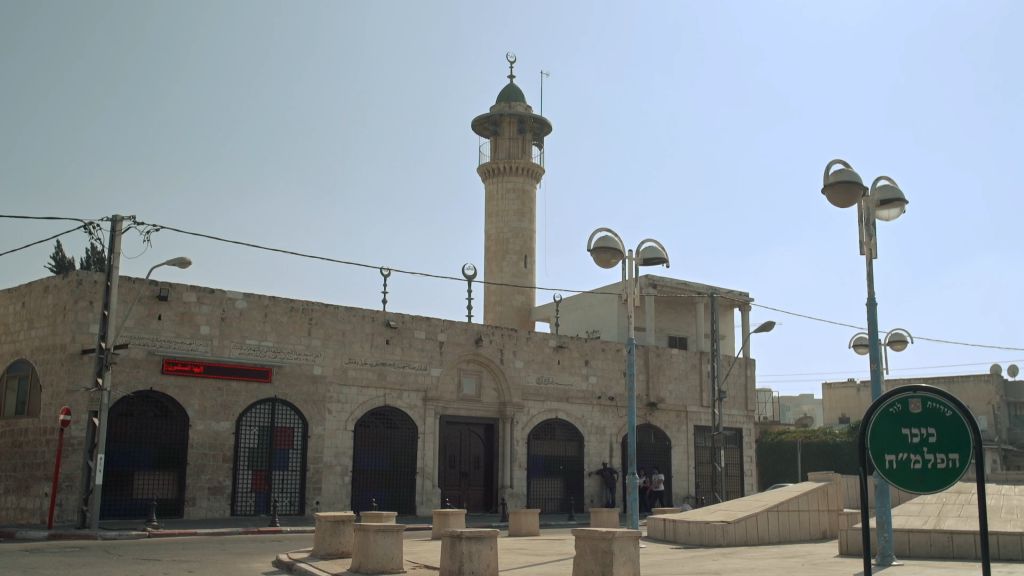
In the most crucial scene, a teacher asks a classroom of Palestinian schoolchildren living in Israel to describe their identity. Only three say “Palestinian,” and in the ensuing conversation, it becomes clear that most of them don’t know what Palestine is: some say it’s in Gaza, some in Saudi Arabia, some in Syria, Egypt, the Emirates, even further afield. The teacher is devastated. The Palestinian identity is being erased. A city planner explains that this is the result of Israel’s destruction of Palestinian cities like Lyd and its constant public reminders of Arabs’ status as personae non grata, strangers in their own land.
Lyd envisions an alternative history based on the continuation of the pre-Nakba reality—not a utopia, just a normal place. In animated sequences, the film reimagines characters—who we see divided and oppressed in the apartheid reality—as peacefully coexisting.
It’s a tantalising dream. In a sense, Coexistence, My Ass!, a film about the Israeli political activist-turned-comedian Noam Shuster-Eliassi, which just won an award at the Thessaloniki Documentary Festival, is about the attempt to create a model of that coexistence—and about the failure to will it into existence against insurmountable political forces.
Shuster-Eliassi grew up in a mixed Jewish and Palestinian village, a sort of intentional community called Neve Shalom/Wāħat as-Salām (meaning “Oasis of Peace”). It’s an instance of prefigurative, utopian politics—which isn’t to say it’s inherently absurd: Israel, the country that established itself as a haven for Jews after the Holocaust, resurrected the dead language of Hebrew and built itself on kibbutzim, is nothing if not a crucible for utopian aspirations.
Problems arise when Neve Shalom/Wāħat as-Salām comes into conflict with forces that make a mockery of such utopian voluntarism. Ultimately, Shuster-Eliassi tells us, the village can’t insulate itself from the outside world. A young Jewish man in the village serves and dies in the IDF. The village is attacked by Israeli settlers. And beyond joint Jewish-Arab primary education, the system diverges, with Jewish and Arab identities imposing themselves.

As for Shuster-Eliassi, she launches herself as a missionary for her community, setting herself up as a peace advocate in the UN and other institutions. Quickly, she grows disillusioned, and the film is about her reinvention and growing public profile as a political comedian. Her convictions come under stress on October 7; friends of hers in the peace movement were among Hamas’ victims. Yet, remarkably, after a period of mourning, Shuster-Eliassi resumes her activism. She has become a prominent free speech activist—the real kind, not the bullshit alt-right knockoffs we get in the West—denouncing the Israeli government for persecuting Palestinian comedians for the kind of jokes that she, as an Israeli, is allowed to make. One must be in awe of her moral clarity and fighting spirit, while also remaining sadly incredulous about her movement’s prospects in an increasingly right-wing Israel.
It’s easy to forget that the peace process wasn’t always left to dreamy utopians and quixotic activists. Halfway through the first episode of the BBC series Israel and the Palestinians, former Israeli prime minister Ehud Olmert reveals for the first time an offer he made to Palestinian president Mahmoud Abbas in 2009. Olmert would have given 95% of the West Bank back to the Palestinians and created an international body composed of Israel, Palestine, Jordan, Saudi Arabia and the US to share custody of the Temple Mount/Al-Aqsa site. Abbas’ advisor reveals in the documentary that they didn’t take the offer seriously because Olmert was at that point a lame duck near the end of his tenure. Olmert argues that, if they had agreed to his terms, it would have put pressure on the next Israeli administration. In the documentary, Olmert comes off as the one looking to make a deal while Abbas and his advisor seem almost flippant. I had a similar feeling watching an old BBC documentary series about the failed Camp David talks between Arafat and Barak. What deal were Arafat and Abbas holding out for? The old quip was that the Palestinians never miss an opportunity to miss an opportunity. Unkind, and a half-truth at best—were the Israelis ever acting in good faith? Would they not have reneged on any deal?—but half-true nonetheless.
Is there a documentary approach beyond the activist and the authoritative that could cut through this morass of ideology and image? In practical terms, almost certainly not. But on a theoretical or aesthetic level I’m put in mind of documentaries like The Hour of the Furnaces, The Battle of Chile, and Grin Without a Cat (and indeed Battleship Potemkin) that place current events in historical perspective and foreground ideological debates in order to make rigorous political arguments. They don’t make documentaries like that much these days. The emphasis now is much more on telling a good story. But maybe they should. Our benighted moment calls for a more complex and discursive documentary modality.
We could all use it. In calling for the eviction of all Gazans to Egypt to transform Gaza into a luxury Riviera under the protection of Israel’s Iron Dome, Trump has done us all a perverse favour. This image—Sparta-on-Sea?—is immensely clarifying, not only for Palestine but for the world that the global oligarch class envisions and is trying to construct. Their world is an archipelago of militarised islands of deracinated affluence— Dubai, Singapore, New York’s supertalls, dozens of gated communities dotted across the American Sunbelt—surrounded by surplus populations occupying expendable hinterlands. The oligarchs are generally indifferent toward the surplus, but Gaza shows what happens if the surplus gets restive. Make no mistake: in a world run by the likes of Trump and Netanyahu, we’re all Palestinians.
The post Pyrrhic Victories: Stories from Palestine and Israel appeared first on POV Magazine.
Related Articles
Visions of the Croisette: The Ultimate Prediction for the 2026 Cannes Film Festival Main Competition
Caught between streaming algorithms and geopolitical upheaval, does cinema’s “sacredness” still matter? A Los Angeles–based team predicts the 22 Palme d’Or contenders for Cannes 2026—from PTA and Östlund to Panahi, Rohrwacher, and beyond.

The Memory Palace: Or, If These Walls Could Talk
How films like Okuirmono, The Nest, and This House explore the histories embedded within the walls of our family homes. .

Exposing the Dark Truth of Digital Totalitarianism: Documentary 'Eyes of the Machine' Arrives in Prague as One World Film Festival Opens
Following its acclaimed premiere at IDFA Amsterdam, investigative documentary Eyes of the Machine screens at One World International Human Rights Documentary Film Festival in Prague, with Uyghur witness Kalbinur Sidik attending in person.