Modern Whore: A Not So Sentimental Education
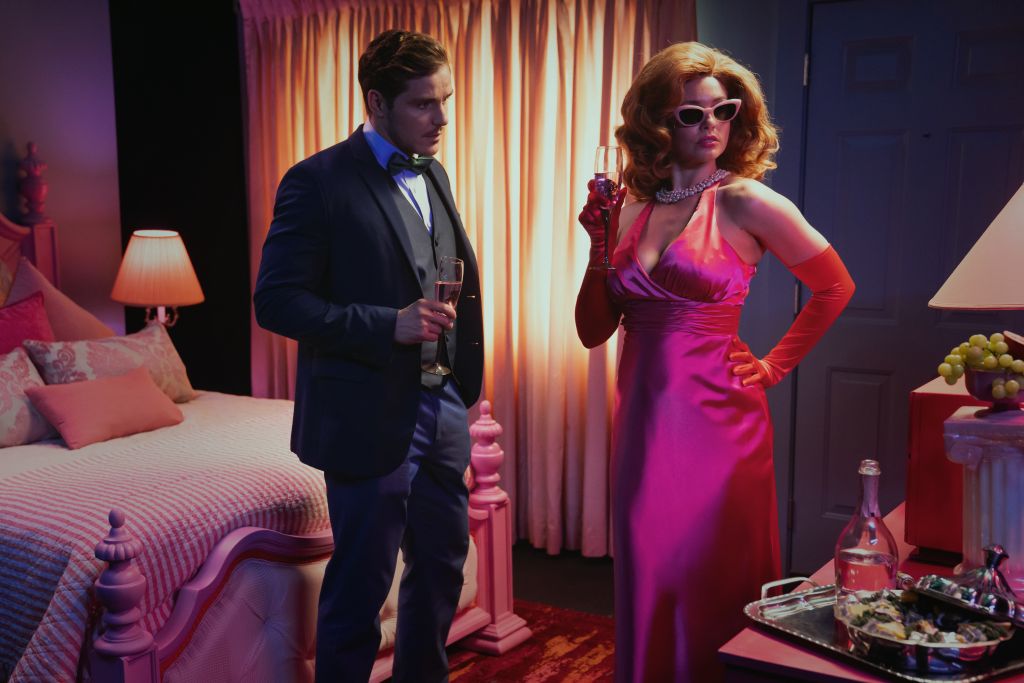
Modern Whore director Nicole Bazuin and star Andrea Werhun make the case that it's high time to consider sex work as labour with all the rights and protections that entails. The post Modern Whore: A Not So Sentimental Education appeared first on POV Magazine.
From the moment they met, Andrea Werhun and Nicole Bazuin began collaborating. At the time, Bazuin was casting for a music video and needed a go-go dancer. “Andrea was recommended to me through friends as someone who would be a great go-go dancer,” Bazuin recalls. “The other go-go dancer didn’t show up, so I told her, I’m going to go-go dance in this music video too. I felt like we had a natural rapport.”
“It’s really special that we started our friendship collaborating,” adds Werhun. “The first moment we met, we were already making something. From there, I got to see Nicole’s other artistic works and was blown away by her talents. A director who could jump in and go-go dance… She is so cool.”
The pair would continue to work together, first on the 2018 memoir Modern Whore about Werhun’s days as an escort and then as a stripper. Werhun wrote the book and Bazuin provided the photographs. In 2020, they adapted the book into a short film of the same name. (See clip above.) The film was a documentary but lush, colourful and playful. It blended recreation and testimonial, channeling the artifice and spectacle of classic Hollywood through a contemporary and personal lens. If Werhun was a Modern Whore, Bazuin was a modern Frank Tashlin (the director of the Jayne Mansfield classic The Girl Can’t Help It). Their vivacity matched perfectly, with Bazuin’s retro style complementing Werhun’s bubbly energy.
In expanding Modern Whore to a feature, the pair maintained a lot of the same aesthetics of the original short but had space to integrate more breadth and a better sense of the sex worker community. The feature-film version, which also goes by the same title, explores Werhun’s beginnings as a baby whore into her coming-of-age as a stripper. It features a multiplicity of voices: sex workers who are artists and friends, discussions between Werhun and her mother and dialogues with her long-term romantic partner.
While the movie relies heavily on recreation, both Bazuin and Werhun were insistent that the film remain a documentary. “This piece combines the authenticity of documentary with the stylization and narrative possibilities of fiction filmmaking in the hybrid format,” explains Bazuin. “I’m hoping it grounds the audience in the feeling that they’re not only getting Andrea performing her story, playing herself over the course of many years, but also getting her truthful commentary of those events.”

“The documentary format is really important as far as allowing a sex worker to tell her own story from a place of lived experience because this isn’t a fictional story, it’s a true story,” adds Werhun. “I think the stylized elements add to the documentary. They help demonstrate the way we all fashion our narratives and our life stories and that sex workers are rarely entitled to that opportunity. If sex workers are telling their stories in a documentary, it’s usually quite dour and grey and sad, and this film is the opposite of that.”
Werhun, a natural comedic talent, also manages to bring a lot of humour to the film. On her first day as an escort, her employers give her the name Mary Ann, because she looks like the character from Gilligan’s Island (Werhun initially wanted to be called Marygold, after a William Blake poem). A “John” compares her to a more well-endowed Mary Tyler Moore. She also has shades of the spontaneous likeability and natural timing of Goldie Hawn in Laugh-In. Much like the film’s aesthetic, Werhun’s performance pulls away from misery and leans into joy.
The aesthetics of Modern Whore are subversive, avoiding the common traps of tragedy and despair. While the film doesn’t shy away from the downfalls and lowest points of Werhun’s experiences, it allows her as a storyteller to assume control. Through aesthetics, framing and collaboration, the film makes clear that Werhun’s sex work doesn’t define her, and neither do her darkest moments.
Bazuin took inspiration from the book in bringing the film’s unique visuals to the screen. “I wanted it to feel artful, like a storybook that has light and dark elements,” she explains. “In that vein, I actually storyboarded the entirety of the reenactments. I wanted it to have that crafted feeling to the compositions.”
Working on a relatively small budget, Bazuin also relied on long-term collaborators, such as director of photography, Nina Djacic, who also shot the short film. “We really connected over colour, because it’s something we are obsessed with,” she says. “We are maximalists with colour.”
They worked with Virtual Production House in Toronto. “We not only built sets on their sound stage but used a volume wall background that allowed us to pre-visualize backgrounds for a number of the settings in the film. That really created an additional control over the aesthetic and how it was crafted.” (A volume wall is a high-resolution LED screen that allows for filmmakers to quickly and easily upload different backdrops for scenes.)
The film is structured into different sections, some related to different periods of Werhun’s life, others to themes. At one point, the film introduces the concept of “Trauma Porn.” They define it as “the request to divulge one’s traumatic experiences for another’s entertainment.” This becomes a common theme in the experience of sex workers, with people, often men, probing for information and trauma that would explain why the women would choose their line of work. It’s a desire rooted in entitlement to another person’s life and mind from which they have been denied access.

“I could talk for hours about why [trauma porn] exists and why people feel comfortable asking sex workers deep questions about their trauma,” says Werhun, “and why every sex worker story that we see depicted in film involves trauma or victimization in some way. It’s a tough nut to crack. In the film, we try to understand why people feel entitled to our trauma and it’s still not totally clear. There are many reasons why people feel like that’s the only story that sex workers are allowed to have.”
Werhun and Bazuin offer up one theory, among others, that the appeal of sex workers is tied in part to the desire to frame them as victims. Rather than being an aside, for some clients, the idea that a sex worker has trauma seems to be part of the appeal. It’s among the myriad of reasons why some men feel more comfortable being violent towards sex workers. For others, it frames the sex worker as needing saving or redemption. We see these dynamics at play often in pop culture, where sex workers are seen to suffer or to need the right man to pull them out of their line of work. They need to be punished or rescued.
“If we look at the way that people talk about sex work, it’s trauma-rooted,” says Werhun. “Where this film is subversive is that trauma is not the centre point. The centrepiece of this work is joy and our right to joy. We depict trauma but I don’t think you can watch this film and feel like, ‘Wow, she made all her decisions because of the trauma she experienced.’ It’s so dehumanizing.”
While the film isn’t a polemic, it’s undeniably political. The movie emphasizes the way that sex workers are kept in the shadows due to criminalization of their work. When they face violence or exploitation, there are few avenues they can turn to without fearing reprisal. Modern Whore also addresses, on a smaller scale, how isolation and stigma are used as tools to keep sex workers uninformed about their work conditions, limiting their ability to organize and fight for their rights.

Werhun explains that “the movement is calling for worldwide decriminalisation of sex workers, which is distinguished against legalization. Legalization is like a red light district, for instance, where you can do sex work in a particular place, but you need a license, and you need to put your name on a registry. There are sex workers who are just not going to want to do that, and they’ll end up working underground. If you don’t work in the ordained regulatory way, you’re still breaking the law, and you can still go to jail. We want sex work to be governed under labour law instead of criminal law.”
She points to New Zealand as an example of a place where decriminalization has been successful. “The way they were able to achieve that was because sex workers got elected and were able to write the bill in consultation with sex workers,” Werhun explains. “Decriminalization is the goal, but even before that, we had to address stigma. I think that’s where artistic work comes in. We need people to understand first that sex work is work and no workers should be more vulnerable to violence or assault or murder because of their occupation. We need to care about people as workers. Then, for me as an artist who makes art about sex work, I want people to understand that sex workers are human beings. I want people to hold in their hearts an ability to relate to sex workers.”
The film, as well as the advocacy work Werhun does, takes an intersectional approach to the idea. Modern Whore offers community as central to working towards these goals with open discussion and relations between sex workers and also non-sex workers.
Earlier this year, Andrea Werhun was among a group of strippers who became regularly featured on Stripper News. Based out of the club she works in Toronto, the social media channel founded by another performer, Diney, blends bubbly comedy with more serious political topics. The channel not only advocates for sex workers but offers a wide range of playful but serious videos that explore different aspects of community and local politics. A recent video features Werhun in a pink bikini, talking about the dangers of Bill-10 in Ontario. The video is fun but informative, offering the viewer an overview of the consequences of further criminalizing drug users in the province—more stigma and deaths.
“As with Modern Whore,” explains Werhun, “I have this sort of bimbo philosophy. People love bimbos: beautiful, hyper femme women who are playful, funny and cheeky. Historically, that type of woman inevitably gets punished. There’s always this slut shaming that ends up taking her down. I don’t see why a stripper shouldn’t be delivering the news or talking to the camera in a feature film. People want to listen to hot, sexy femmes, there’s no doubt about that!”
Fundamental to the film, thematically and structurally, is the importance of storytelling. “Storytelling is the primary means of survival for sex workers,” says Werhun. “In a society that doesn’t value our perspective and experiences, it’s the stories we tell each other that are most important. Our stories protect us because when we tell our stories publicly, we risk so much. We’ve not built a world where it’s safe for sex workers to tell their own stories, but those stories are lifesaving. We can’t rely on law and enforcement, and we can’t rely on governments or politicians to back us up or fight for us. We fight for each other.”

The film features many different stories and storytellers, creating a rich tapestry of experiences and nuances. “It was very important to me that we include others’ voices,” explains Bazuin, “because it’s so easy to think of sex workers as a monolith. It’s so easy for a civilian audience to look at the sex worker speaking and say, she represents all sex workers. That couldn’t be further from the truth.”
These scenes offer a fascinating counterbalance and tension with the more heavily scripted recreations. They are often raw and vulnerable, bringing an added layer of spontaneity to the film’s complexities. Other sex workers offer different experiences, anxieties and perspectives. And even as they relate to each other, they also sometimes diverge, offering alternative points of view on political or personal goals. These sequences within the film feel honest and open, structured around attentiveness and mutual respect.
The less-scripted sequences also include other people in Werhun’s life, like her mother and long-term partner. “Part of the film’s delightful subversion,” says Bazuin, “is demonstrating that the sex worker protagonist has meaningful relationships with the people in her life. She has a long-term relationship with a loving partner. She has a mother who loves her. That’s in and of itself groundbreaking because we just do not see sex workers as people who live in community and are loved by the people that are around them.”
For Werhun, she hopes that the film will help shift the conversation on sex workers. “I would like to hope that we are capable as a society and as a culture—and maybe this is only a hope for Canadian culture because I can’t speak to what Americans are doing—that we can accept that a woman can be hot and smart and funny at the same time and be taken seriously,” she says. “I don’t know though, I guess we’ll have to wait and see!”
Modern Whore had its world premiere at the 2025 Toronto International Film Festival.
It has its U.S. premiere at the 2026 Palm Springs International Film Festival and is coming soon to theatres.
The post Modern Whore: A Not So Sentimental Education appeared first on POV Magazine.
Related Articles
Visions of the Croisette: The Ultimate Prediction for the 2026 Cannes Film Festival Main Competition
Caught between streaming algorithms and geopolitical upheaval, does cinema’s “sacredness” still matter? A Los Angeles–based team predicts the 22 Palme d’Or contenders for Cannes 2026—from PTA and Östlund to Panahi, Rohrwacher, and beyond.
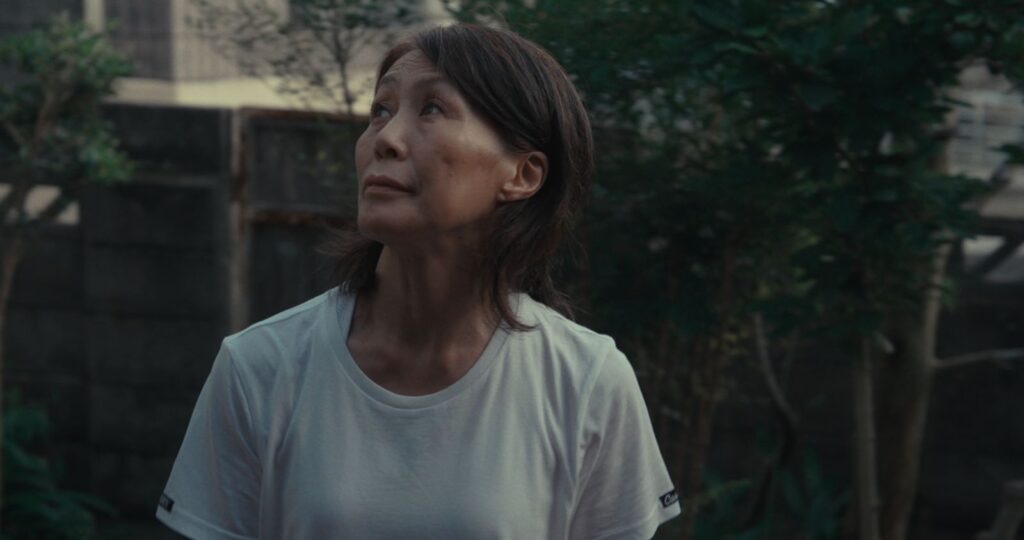
The Memory Palace: Or, If These Walls Could Talk
How films like Okuirmono, The Nest, and This House explore the histories embedded within the walls of our family homes. .
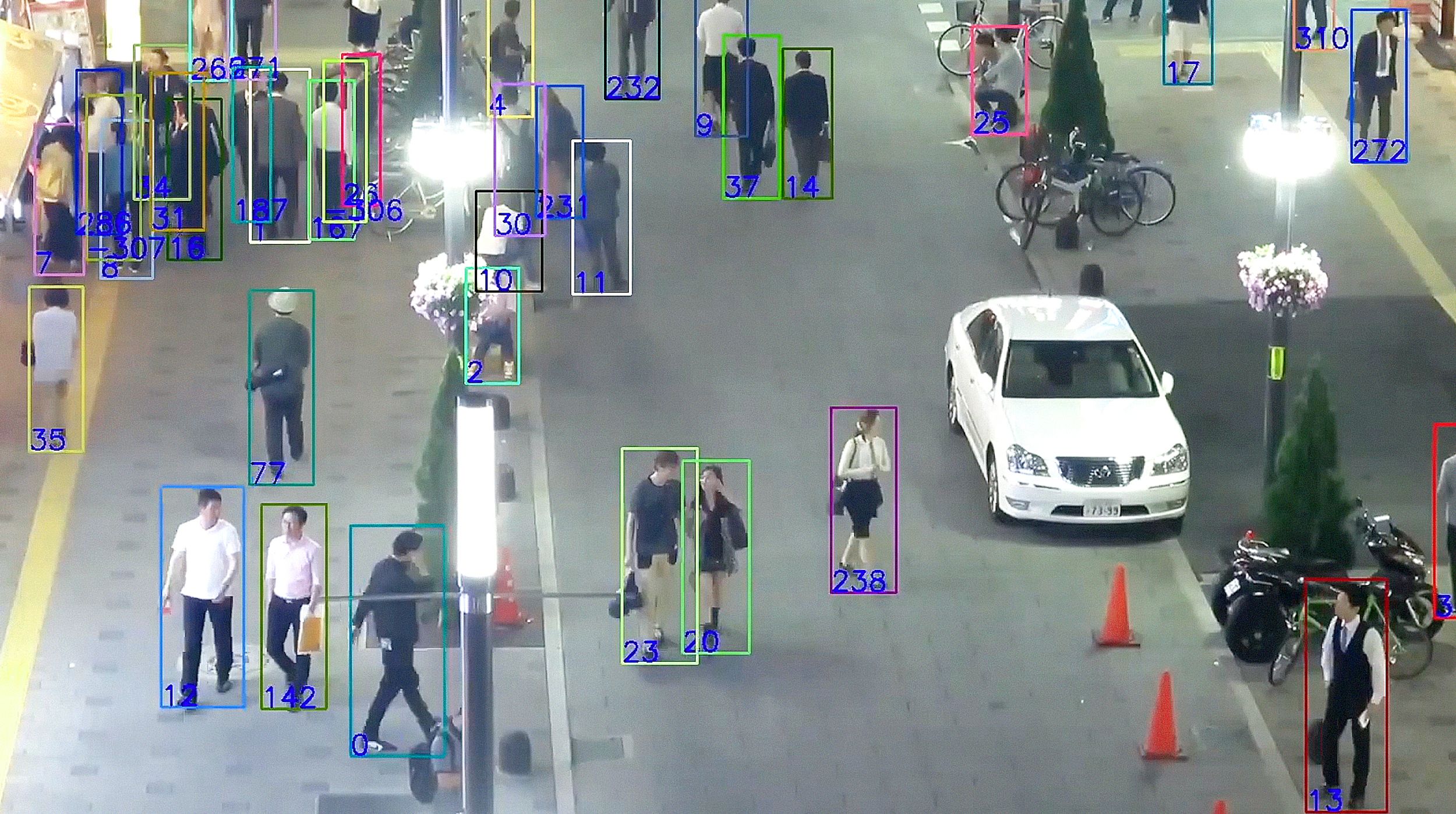
Exposing the Dark Truth of Digital Totalitarianism: Documentary 'Eyes of the Machine' Arrives in Prague as One World Film Festival Opens
Following its acclaimed premiere at IDFA Amsterdam, investigative documentary Eyes of the Machine screens at One World International Human Rights Documentary Film Festival in Prague, with Uyghur witness Kalbinur Sidik attending in person.