King Hamlet Review: To Be Or Not to Be a Serious Actor
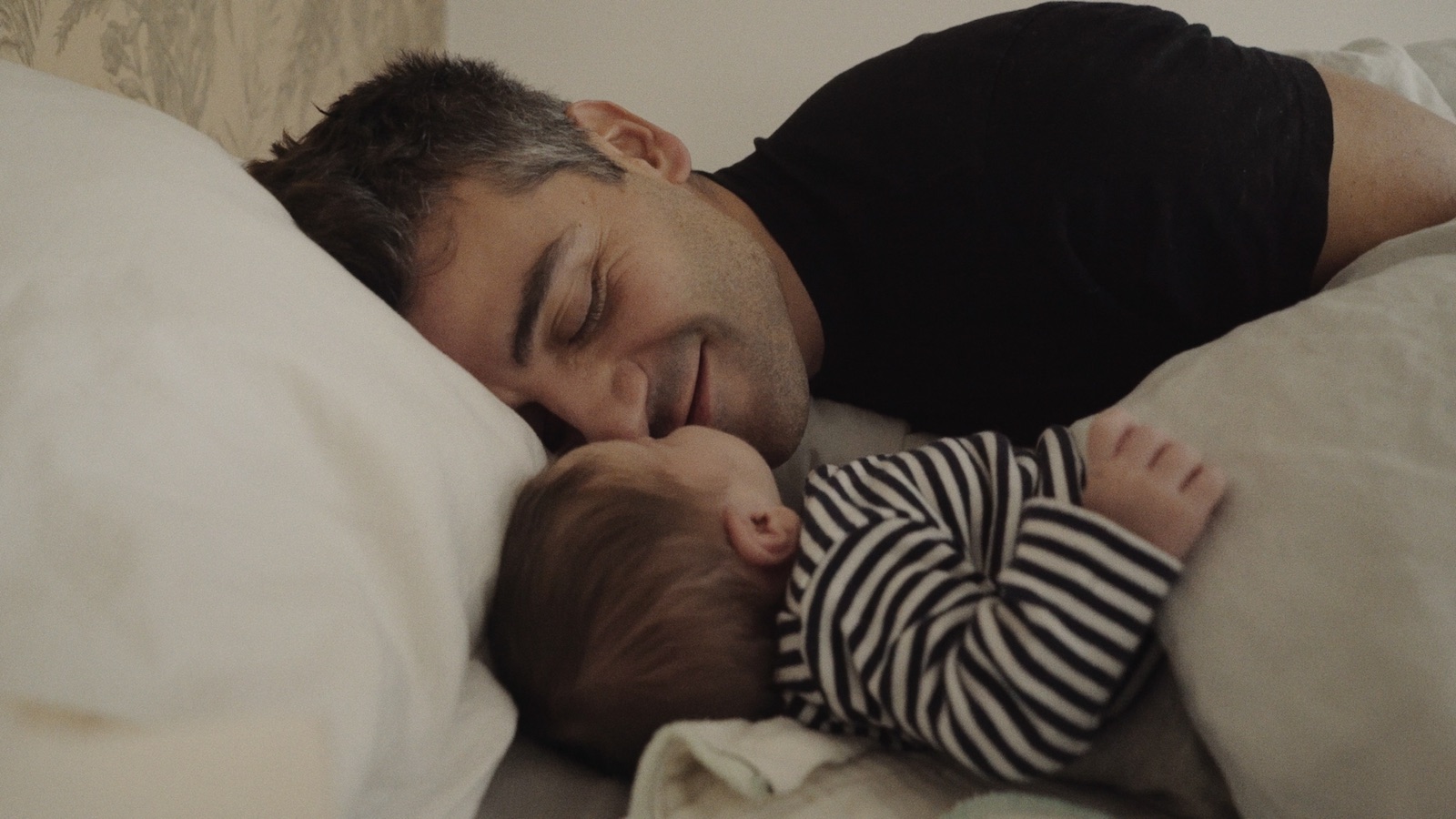
Oscar Isaac and Elvira Lind invite audiences into their lives in King Hamlet as the actor plays Hamlet on stage, and both a birth and a death happen along the way. The post King Hamlet Review: To Be Or Not to Be a Serious Actor appeared first on POV Magazine.
King Hamlet
(USA/Denmark, 90 min.)
Dir. Elvira Lind
Prod. Sara Stockmann, Sofia Sondervan
“Can I be as good as I think I can be?” actor Oscar Isaac asks theatre director Sam Gold in King Hamlet. The two artists and friends find themselves realising a passion project from their Julliard days. They want to stage Shakespeare’s Hamlet. But they don’t aim for a traditional production. They hope to shatter expectations that audiences bring to one of the most performed plays of all time, if not the most. Moreover, taking on the meatiest of all dramatic stage roles inevitably inspires a bit of imposter syndrome in an actor. Especially when he’s coming off a Star Wars movie, Isaac wants to stretch his acting muscles as his star status rises. To be or not to be a serious actor, that is the question that underlies this touching backstage documentary.
The query actually serves as one of several concerns that ripple throughout the production, and the film by Isaac’s wife, Elvira Lind (Bobbi Jene), about the production. Lind follows Isaac and Gold as they bring their Hamlet production to fruition. But life happens along the way, and the effectiveness of King Hamlet comes not in chronicling an ambitious production, but in the simple observations of daily life among creatives that inform, shape, and fuel their work. It’s a touching and intimate portrait of what it means to share your life with a room full of strangers. And to perform when a rogue cellist tests all limits of taste and patience.
Diving into Hamlet and the tragedy of the prince of Denmark forces Isaac to look at his roles as a son and father in unexpected ways. The offstage drama begins when Lind becomes pregnant early in the production. Their marriage and the birth of their son, Eugene, affords Isaac new perspective on what it means to be a parent and raise a son. As Eugene coos and plays with his toys, he inspires Isaac to find a level of empathy within the dynamic between Hamlet and King Claudius that doesn’t immediately appear in Shakespeare’s text. But there’s also a glimmer of furious anger when time comes in the play for Hamlet to confront the father who failed him.
On the Gertrude front, Isaac experiences a devastating loss when his mother passes away leading up to the production. As Isaac and Gold further explore the themes of grief and loss inherent in Shakespeare’s verse, audiences and press observe elements of art imitating life that echo in the play. Isaac resists these readings. A profile in the New York Times especially cheeses him as the critic narrativizes Isaac’s performance as a means for navigating his grief. The actor interprets the profile as a slight. The reading insinuates that he’s subjecting the audience to four hours of him working out his feelings nightly onstage.
The peek behind the scenes reveals that such a reading is far from the truth. Gold’s vision for Hamlet borders upon topsy-turvy. There are many cooks in the kitchen for this production. Therein lies some juicy drama.
Conservative creative choices in the production include putting a toilet on the stage and having Ophelia, played by Gayle Rankin, burying another actor onstage. She lugs some potted plants from the wings, dumps the soil, douses the mound (and herself) with a hose, and rolls around on the muddy stage. Isaac runs around in his underwear and beats a lasagna amid Hamlet’s potential descent into madness. He also begins the hallmark “To be or not to be” soliloquy while lying down on a table. That’s unconventional delivery to say the least, but one angle from which King Hamlet lets audiences immerse themselves in an unconventional production that appears to be like a literal and figurative mess that challenges critics and audiences.
Lind observes as many creative visions collide during the intense production and rehearsals. Gold’s offbeat vision imagines Hamlet as a dialogue of sorts between the players and the audience. The play unfolds in an intimate theatre with audiences on three sides. Minimal space separates the stage—an arena, really—and the crowd. This set-up means that the audience’s energy inevitably varies show after show, which might inspire different reactions from the actors.
In addition to dialogue, Gold’s Hamlet features a great deal of crosstalk. This dynamic comes via composer Ernst Reijseger, who threatens to completely overwhelm the production with a creative vision that clashes with seemingly everyone else in the show. Reijseger putters away on his cello throughout readings and rehearsals. At times, he waltzes around the stage, ascends the rafters, and feels the music with something akin to contemporary dance. It’s truly bizarre and often tonally out of whack with the verse the actors try to deliver. Later in rehearsals, he pulls out some fancy and very large pedal instruments that occupy considerable space on stage and add a comedic touch. Think Hamlet via Spinal Tap.
Reijseger’s peculiar habit for stealing the spotlight in Hamlet provides true documentary gold for King Hamlet. One can only watch the frustration on the actors’ faces as Reijseger’s music and behaviour speak overtop their dramatic efforts, inspiring overacting and flat notes. Gold, meanwhile, displays the patience of a saint with his composer, all the while one can see a mental breakdown building behind his eyes. One expects things to get downright Shakespearean with Reijseger landing among the casualties of Hamlet’s infamously high body count.
Fortunately, the team learns to find harmony amid the discord, and Hamlet sees its opening night. But Isaac ironically loses his voice heading into production, which throws another metaphor in his direction. The film observes what it means to find one’s voice as an artist the world continues to move around him. Hamlet might go on night after night, but the drama offstage rarely plays the same day after day. This production shows that daily life must inform a good play and be in dialogue with it. But most people can probably do without an errant cellist strangling a cat as they bare their soul for others.
King Hamlet screened at the 2026 Palm Springs International Film Festival.
It is currently playing on the festival circuit.
The post King Hamlet Review: To Be Or Not to Be a Serious Actor appeared first on POV Magazine.
Related Articles
Visions of the Croisette: The Ultimate Prediction for the 2026 Cannes Film Festival Main Competition
Caught between streaming algorithms and geopolitical upheaval, does cinema’s “sacredness” still matter? A Los Angeles–based team predicts the 22 Palme d’Or contenders for Cannes 2026—from PTA and Östlund to Panahi, Rohrwacher, and beyond.

Exposing the Dark Truth of Digital Totalitarianism: Documentary 'Eyes of the Machine' Arrives in Prague as One World Film Festival Opens
Following its acclaimed premiere at IDFA Amsterdam, investigative documentary Eyes of the Machine screens at One World International Human Rights Documentary Film Festival in Prague, with Uyghur witness Kalbinur Sidik attending in person.

The Theft Review: Reclaiming Afghanistan’s Cultural History
Efforts to repatriate artifacts and artworks stolen from Afghanistan invite wider considerations of cultural history in Aisha Jamal's The Theft . .