How Nuisance Bear Finds the Perfect Marriage Between Commitment and Storytelling
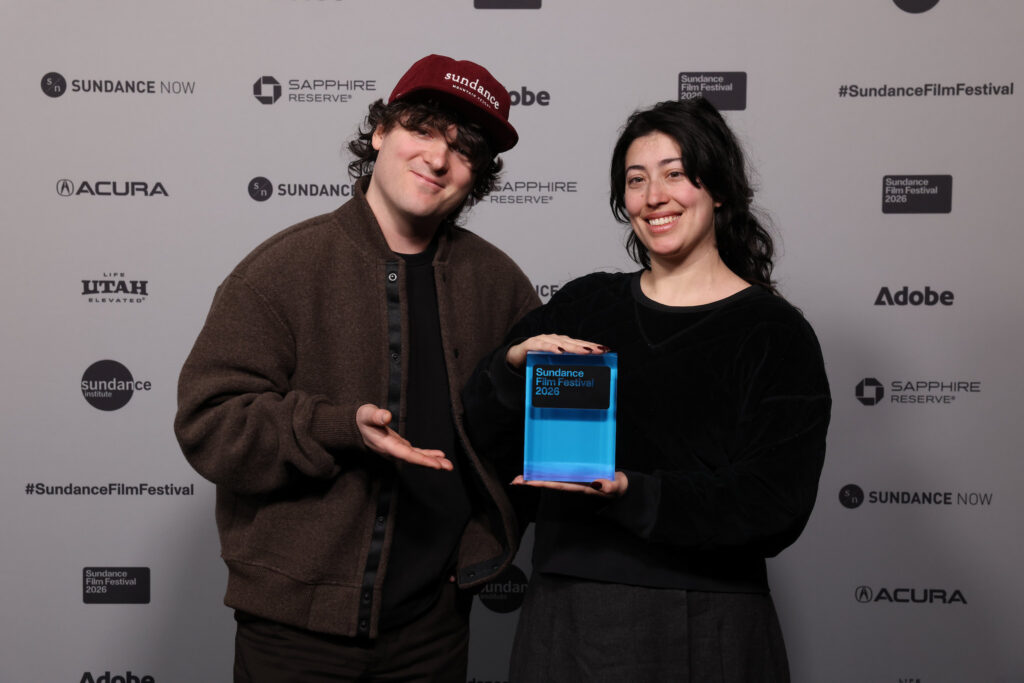
An interview with Nuisance Bear directors Jack Weisman and Gabriela Osio Vanden on their Sundance Grand Jury Prize winning documentary. .
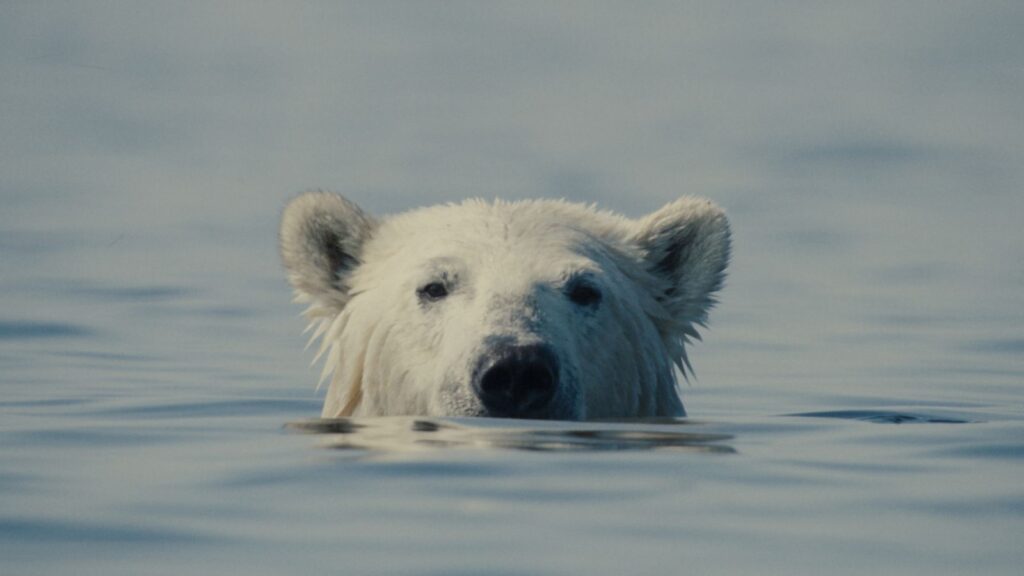
The road from celebrated short to feature length film is often a bumpy one as it expands its story without trying to feel bloated. Nuisance Bear avoids these pitfalls brilliantly, expanding an award winning 2021 project to nothing short of a Northern masterpiece. The feature recently debuted at the 2026 Sundance Film Festival.
Sumptuously photographed and framed, directors Gabriela Osio Vanden and Jack Weisman go beyond the stunning imagery to dig deep into the collision between wildlife and human communities. Contrasting the narratives from Churchill, Manitoba, the home for the events from the short film, and Arviat, Nunavut, a community some 300 km north with a very different relationship with these bears, the film is an exercise in precise storytelling and deeply nuanced consideration of the complex dynamic between nature and those that call the North home.
We spoke to the filmmaking team following their Sundance premiere just prior to them winning their Grand Jury Prize, and mere days after a post-screening marriage that took place on Park City’s main street. We spoke at length about the decade required to bring Nuisance Bear to life, the technical and ethical challenges of shooting in the region, and the feeling to finally be able to free their film from editorial captivity.
(Watch the short film below!)
POV: Jason Gorber
JW: Jack Weisman
GOV: Gabriela Osio Vanden
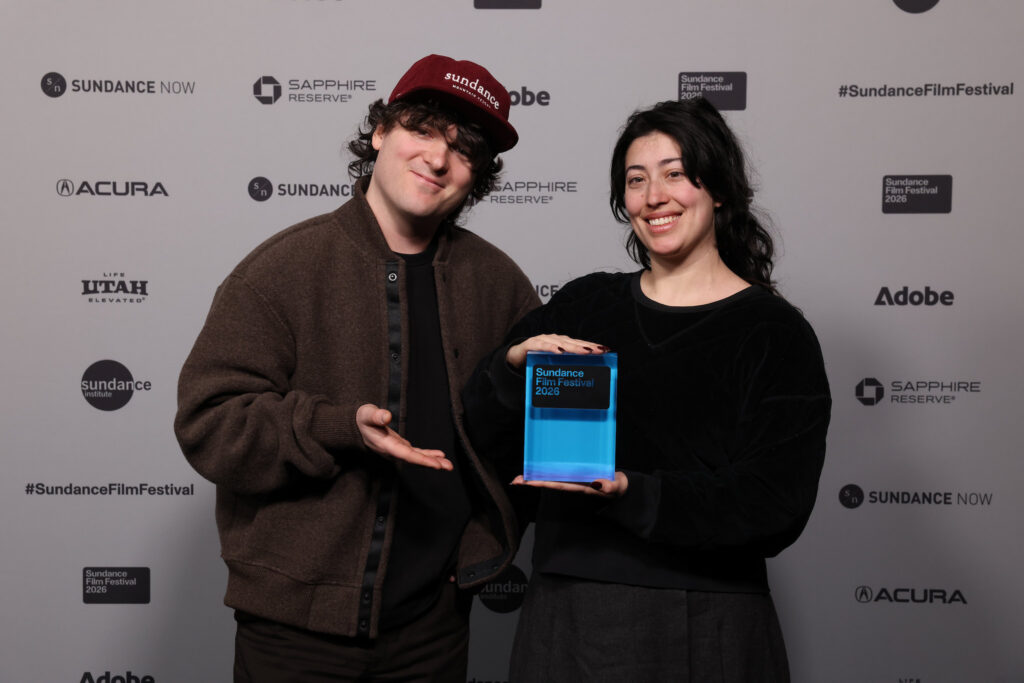
POV: I heard you guys just got married?
JW: Yeah, we did!
POV: At the actual screening?
JW: No, we didn’t want to do that. I planned to propose. It wasn’t completely spontaneous, but I didn’t want to do it at the premiere because it felt like it was going to overshadow the screening. We waited until Monday. All of our parents were here, both sides, our cousins, our teams, our best friends, and so everyone was here. We were trying to figure out where to do it. I decided that it was best in front of the Egyptian [Theater]. I messaged Sundance to send a photographer and they said, “No, we can’t do it. It’s too busy!” Eventually they did, and they sent a really good one. So I proposed, and then our editor, Andreas, managed to get access to the Egyptian, which is closed. We said we were going to go for a little tour after the proposal, and so we all wandered into the theatre and all of a sudden we’re standing there in the Egyptian,
GOV: And one of his friends is ordained.
JW: And we were like, “Huh, this is kind of like a church. There’s an aisle, there’s seats, people have gotten married in movie theatres,” so it wasn’t a huge leap, but we’re like, “Do you guys want to do a mock wedding?”
GOV: And I was like, “Let’s get married now.”
JW: So then I went into directing mode where I was walking people around: “Gabby you and your father go to the back of the room, and everyone sit here, and who’s got the music? Gabby what song do you want to play?” Then they walked down the aisle.
POV: So what song did you walk down the aisle to?
GOV: I love the soundtrack from Baz Luhrmann’s Romeo + Juliet and there’s this one song called “Kissing You” that I always thought was romantic. Our friend put that on his cellphone and held it up in the air.
POV: So a little bit of Cameron Crowe, a little bit of Baz Luhrmann, all happening all at once. Very appropriate indie stuff going on at Sundance!
JW: Definitely. And the Sundance photographer was definitely supposed to be somewhere else at this point.
GOV: We really stressed her out. She was like, “If I had known you were getting married, I would have brought lights over!”
POV: Well, congratulations. Anyway, let’s talk about the film, and transitioning from the short. Did you always know that the story was going to go further north?
JW: We love the short, and we don’t want to diminish it in any way, but it was like a detour in terms of the development of the feature. From our first trip to Churchill we knew that we wanted to tell this longer story. The central conflict was the juxtaposition of these two communities that are, in Arctic terms, very close together, but have completely different worldviews.
We had no credibility as wildlife filmmakers or even as directors, so we were working on this project and sort of failing year after year, inch by inch, row by row. We hadn’t unlocked this bear’s POV, how we really wanted to tell the story, until we made the short.
GOV: It’s worth noting when we were making the short, we were getting footage for this feature. We weren’t intending to make a short, we just came back with footage and were like, “Hey, this could be a short.”
JW: I edited this assembly of that short in Gabby’s basement during Christmas and sent it to Jennifer Baichwal, whom I barely knew. She really had been supportive of my work, and she said yeah, It’s a movie, submit it to TIFF, it’s going to get in. It’s going to win all of these awards and then you’re going to get to make your feature.” And she was right!
POV: Let’s talk about that sense of community. You’re shooting in multiple communities, and also the general community of both Canadian documentarians but also obviously, rightly or wrongly, a huge reason this film actually happened is because a bunch of Americans got interested in it.
GOV: Yeah, true. Well, it’s a very Canadian film. After the short was doing well, we first were looking into seeing if we should do it with Canadian funding because it felt right with it being such a Canadian film.
JW: But there were restrictions that would have removed our producing team that we had already been developing the idea with. There’s restrictions on having American producers and UK producers be part of your film, including Will Miller from The Territory and Teddy Leifer from All That Breathes. Michael Code is Canadian, so that wasn’t an issue, but we would have had to lose Teddy and Will, and we felt like they were such important components to the project. Will is a lifelong friend of mine, we own a company together, so it would have been removing the company. So we had this choice to go the Canadian system and maybe be limited in terms of our distribution path because we’d have to retain those Canadian rights, or go to the US market and see what happens.
GOV: And we already had interest.
JW: We had a lot of interest with six offers. Then A24 came in and swooped it up at the last second, basically.
GOV: And then we were able to leverage a better offer because of the other interest, and we were able to wrestle final cut for ourselves, too, which was kind of nuts.
POV: Are there things that you would like to see change in the Canadian system to allow you to make the films you want to make?
JW: It’s tough because we’re kind of inexperienced. This is our first feature film, and so we haven’t made a “Canadian” film yet to really be able to compare it to. I think that the media landscape is changing. I think the relationship with the United States is changing. It would be worth looking at whether the rules for Canadian Content should be adjusted to be able to work more flexibly with American partners. I understand there has been this history of American producers taking advantage of the tax money and stuff, I totally get why [there are restrictions].
GOV: We need to protect that tax money.
JW: We do. It’s just very complicated, but it does limit the ability of Canadians to make the jump to the international market. I realize this now, and I’m very thankful we did make the choice that we did.
POV: This is the kind of nuance and complexity your film exemplifies. Let’s talk about that sense of community, working with Churchill, and then the more northern community, the Inuit community. Let’s go through the story about how all of that came to be.
GOV: Yeah, well, Jack and I first went up in 2015, where we met some people. We were 24, 22? So we were idiots. Basically. We were fresh out of film school.
POV: Give a shout out, where did you go to school?
JW: York University—thank you so much for teaching us about the gaze!
GOV: That program is so great because there’s all the practical skills that you learn, but it’s also theory based. You’re thinking about what is your impact as someone with a camera, what does it mean to hold a camera. I don’t think documentary can ever be fully objective—you’re framing, so inherently, you’re making choices.
It was really thrilling for us going up North because we went up there thinking we’re going to see polar bears in the wild. The reason why this place is so popular is because it has infrastructure to get close to them, and it’s a community that a bear’s migration path goes through and has always gone through. So when we were there, I was like, “Oh, our framing choices make such a big difference.”
JW: Everyone is lined up getting the same shot.
GOV: There’s just the one angle where you don’t see any human infrastructure, you don’t see any phone lines, and you don’t see any cars. And we were like, “Oh, this is nuts.”
JW: The circus of it all was so much more interesting than just the pristine wildlife.
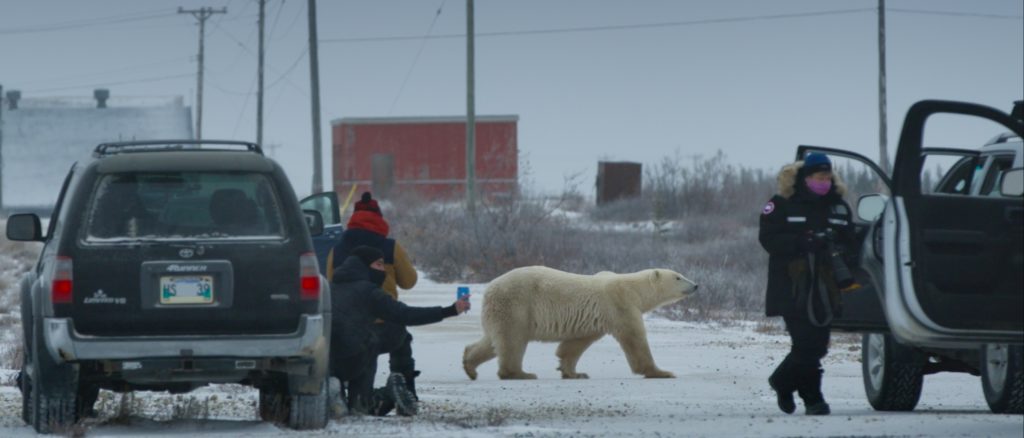
GOV: At the time there was this show called Polar Bear Town, which was a reality TV show. It was overly sensational, but it was also really funny. We met the three guys that were the leads in it, and they represented different aspects of…
JW: …This frontier mentality.
GOV: Yeah, and so we got really close with Dennis Compayre and Brian Ladoon.
JW: They were these incredible Churchill characters who brought us into their world in a way and in an unfiltered manner.
GOV: They’re all older gentlemen. Dennis Comparye was a lumberjack and grew up in this place. He’s a bear whisperer.
JW: He had a friendship with a bear for 20 years, which he’s famous for. Anyway, there’s this amazing history, and there’s this infrastructure in Churchill for tourism. And so we weren’t really outsiders, we were just like everybody else, but we were pointing our camera at a different angle, which not many people noticed. We worked with the local government to get all of the appropriate permits, we worked with local guides. Our producer, Michael Code, was born in Churchill and has a large family network there. He also has a pal, who would bring his shotgun and protect us and stuff like that.
GOV: He’s an expert hunter.
JW: Churchill had its own difficulties, like we were filming behind the scenes of the postcard image, and so that ruffled some feathers. We’re pretty approachable people, and the short doesn’t have any talking, so it’s not really finger pointing. So we were welcomed back.
We rented a house in Churchill because renting rooms in a hotel for the amount of time we were there would have been so expensive. We were able to rent this decrepit house that had cat pee all over the place, and we had to put plywood down and it was just a really ramshackle shack, but it shared a driveway with the bear patrol. So we could see all of the comings and goings. At first they were, like, “What are these guys doing?” But then we spent enough time with them that they started to trust us. They even saw themselves as the heroes of the short, which was remarkable. They wanted to be filmed even more, so they gave us access in a way that I don’t know they’ve given many crews before, and they might not give again after this film! We were pretty transparent about what we were doing, we were making this neutral bear POV film.
In terms of Arviat, it was a completely different set of challenges in terms of access and that was much more complicated. The biggest obstacle to the film almost wasn’t the harshness of the environment or the logistical challenges of filming polar bears, it was gaining permission to tell the story with the community of Arviat and with the Gibbons family especially. Thankfully, we had been going up to Arviat for many years, so the biggest ingredient was time. We were spending the time to be able to listen and respond and not go in with a preconceived idea and be very aggressive about our approach. With bears, you have to be very calm, it’s like working with other wildlife. I feel like Inuit people are very sensitive to your own intentions and stuff like that. I went up there in 2017, and people were curious.
GOV: And they wanted people to know about the bear problem.
JW: In 2018, Mike’s son was killed. I went back and the tone in the town had completely shifted. It was like night and day. No one wanted to speak about bears. It seemed like the community at large was traumatized, and out of fear of upsetting the Gibbons family. We took a step back. We didn’t think that we were the right people to be telling this story, at least at that time. We thought maybe we should just focus our efforts on trying to develop a film just in Churchill. And that’s where the short sort of began.

POV: What shifted?
JW: What shifted was that when we made the short, and it got released, one of the elders that we’d been speaking to about this project in Arviat, a cousin of Mike Tunalaaq Gibbons, messaged me. He asked, “What happened to the longer film? What happened to the Arviat part of all of this? I think you should tell the story.” And I thought that maybe enough time has passed and we should go up and explore this idea.
There’s a wonderful producer in Arviat named Eric Anoee. He works with Isuma, Zacharias Kunuk‘s production company. He’s the most experienced media person in this whole region, and gaining his trust took five years alone. Once he was on board with the short and understood what we were trying to do, he also encouraged us to go back, to talk to people, to sit on people’s couches and listen, and do a community screening.
POV: There’s an obvious historical context of people coming in and taking these stories rather than listening to them. Stories. Was it ever made clear to you that they didn’t want you telling this story, or were you so cautious about burning a bridge that, in a weird way, you didn’t allow them to reject you?
JW: Yes, that’s exactly right. It wasn’t like we were reticent to ask, it was more that we just needed to take the time before we did ask, and we needed to ask the right people. I never felt pushback from anyone in these communities. In fact, most of the pushback came from people who aren’t from the communities, who live in cities, and aren’t related to this issue whatsoever. They focus primarily on me, the white guy, for this criticism. They would ignore Gabby when they were making this criticism, even if we were sitting in the same room.
Ultimately, we felt that we had this responsibility to make contact with the Gibbons family for the sole purpose of letting them know that we wanted to do this and that we would be around. I had no intention of Mike being the narrator at this point.
POV: Then it goes from just being a bear story to literally having this man being the voice of your film.
JW: We did the community screening [of the short]. 200 people came, there was a really enthusiastic response to the film. They were asking if we had local guides we were working with, and it just felt like there was real interest in us doing this film. No one from the Gibbons family came and said, “We don’t want you to make this.”
GOV: It’s worth noting too that people in Arviat, at least from the conversations we’ve had with them, listening to them, they’re frustrated with Churchill always getting the narrative. Even though we’re not from that community, because we were making something in Churchill as well, they’re happy to be included in the conversation because they’re often left out. That’s why we felt this need to not necessarily push, but keep going and exploring because we were getting positive feedback that someone’s listening to what they’ve been saying.
Practically everything that goes up to Churchill and shoots has some sort of preconceived script, or thing that they’re trying to do. They can only afford a small chunk of time, so they’re trying to make everything happen in that time. With most of our trips to Arviat, we went there with no cameras and just chatted with people.
JW: Michael Code was born in Churchill, his father was very involved with the early tourism industry, and he grew up riding on those buggies that you see at the beginning of the film. And then they moved to Arviat. Mike’s mom is Dene and was relocated to Churchill when she was young. They moved to Arviat and his father was a schoolteacher, and was celebrated.
GOV: He is universally beloved.
JW: We didn’t really know this when we met Mike at a bar at Hot Docs in 2019! It turned out that it was fate. He had this pre-existing relationship with the community, through his father especially, that opened doors in a way that was remarkable. Even at the community screening, someone was like, “Are you Alan Code’s son?” And he was like “Yeah,” and then everyone clapped and cheered because Alan had made such an amazing impression as a teacher. I think it’s because Alan taught some of the Inuit curriculum, which had been removed. It was a phenomenal kind of spiritual experience.
GOV: Mike’s been part of this project since before the short. He’s been a really integral part of the feature.
JW: After the screening, we needed to apply for a permit, we needed to meet with the board, and we needed to pitch the idea. In full transparency, we were nervous that they would say no. They said no to a Netflix show, they said no to another filmmaker. We were the only filming permit allowed in the duration that we were shooting, in 2023-2024. We met Joe Karetak, another executive producer on our film. He’s an incredible translator, philosopher, writer, educator, trauma counselor, multi-hyphenated genius. Joe is cousins with Mike Gibbons.
GOV: Joe has a program where he interviews elders and records them. He wrote a book called Inuit Qaujmajatuqangit, which refers everything we know to be true, or the Inuit knowledge system.
POV: Let’s talk very briefly about the logistics. You have electronic cameras that you’re shooting in the middle of nowhere, you have helicopter shots…
GOV: Well, it’s very difficult. With the short, we were using our own equipment, so it was a much smaller camera package and it was a three access stabilizer that wasn’t very strong, and one cheap lens.
JW: Not meant for off road, harsh conditions. We were using what we had available as cinematographers for the short. It was a Ronin 2 DJI with a FX9 Sony camera and a 200mm lens, which is not a long lens for wildlife. Because we were limited by how much we could zoom, it forced us to include all of the messy context, like that tracking shot that the short is famous for. We wouldn’t maybe have gotten that if we had been able to punch in further, so our creative limitations worked well.
With the feature, we knew we wanted to use the wildlife blue chip standard, which is the Shotover gimbal, and the Cineflex, the 50-1000mm. It’s whatever Planet Earth was using. The cost of that can be $10,000 a day, which we did not have. However, there has been so much excitement about this project and so much belief that we were able to find incredible partners that were willing to support us.
When we attached A24 to the film and had the Oscar shortlist stuff, we were able to go to these production companies and ask them if they would do us a favour. River Road films in Vancouver, Jeff Turner, was willing to train us on the device, which is the first step. You can’t just go with it because it’s so complicated, and I still don’t even really understand it. We ended up having to bring Jeff’s technician, Jack Gawthrop, up with us who was fantastic. Jeff Gawthrop, Ian Kerr, all of those guys are professional wildlife filmmakers, but had never had done anything quite like this before in terms of the story we were trying to tell. It was during the strike, so all of the equipment was just sitting on the shelf.
GOV: The strike worked to our benefit! [Laughs.]
POV: I guess they’re not shooting an X-Men in Vancouver, so you could take the Cineflex to the middle of the Arctic. And so you are literally mounting it to a helicopter gimbal up there?
GOV: Yeah, so the Shotover and the Cineflex were made to go on helicopters, that’s what they were designed for.
POV: I understand, but you had to get a helicopter in Churchill.
JW: Oh no, there’s lots of helicopters.
POV: But you had to be able to have permission to bolt it on to a helicopter!
JW: [Laughs.] Just for one day!
The way the bear lift works is that they’ll only give you access to being around the rangers while they’re processing the bear. When they fly a bear, if you pay for it, you can follow. We had to have production meetings and plan how we were going to shoot it. We had a vehicle on the ground. I had a handheld camera to get that close-up shot of the bear being processed, and then we, that morning, we mounted the Cineflex on to the second helicopter. We landed, got out with another camera, and then shot handheld.
POV: And the bear is breathing in front of you with, like, a million dollars’ worth of camera equipment.
GOV: Yeah, it was pretty special. I felt bad for the bear. I was crying during the shot. I’ve gone under anaesthesia before, and have experienced that confusion of letting yourself have a doctor do things to you.
JW: And then not having the awareness of what actually is going on. There’s no context that they can understand.
GOV: When we were in the helicopter, we saw it start to pull its blindfold off, and then it’s just looking, so we were like, “Well, what does that feel like for a bear, who’s never flown before?”
JW: They relocate about six, ten, twelve bears every year. It depends on if the jail fills up. If there’s a lot of bears in jail, they’ve gotta move them out, and so they give media teams the option to sponsor a lift. So you sponsor a bear that’s going to be flown out anyways, but then you basically pick up the tab. That maybe is an ethical dilemma or conflict, but that is how it is, and there’s other media teams that have done it before us. There will probably not be any more going forward. We were the last, partly because—I mean, you saw it.
POV: It’s very complicated what you guys are doing.
GOV: It is, you’re always drawing a line. I think that’s why it was very difficult emotionally. There are things that you want to get, or you need to get to tell your story properly, but sometimes you feel weird about it. But I don’t feel that weird about it because whether we filmed it or not, it was still going to happen.
JW: The bear still goes to Arviat regardless. I mean, this is a recurring journey every year.
GOV: Conservation officers, they’re an authority and they operate like cops. So they’ll let you in a certain amount, but they’re doing their thing, they have their schedule, so you’re let in or you aren’t.
JW: And it was a crucial sequence for the film, too. You really understand the trauma, and it’s just such an impactful midpoint.
GOV: Especially since a big topic in general about this area: how Indigenous people have been treated there and the forced settlement both for the Dene and the Inuit.
JW: To get back to your original question about the camera stuff, it was designed for a helicopter, and we used it one day on a helicopter because that’s all we could afford. But then every other time, it’s mounted on the truck, which is much more passive, much less intrusive, and so much safer because you can get a close-up from 100 metres away. We had the option have a U-Crane, but I figured that’s going to spook the bears. Our profile was already intimidating, so we didn’t need another giant thing. It would have been amazing to have that ability to jib up and down, but it felt like the right choice…
GOV: …To be as small as possible.
JW: To be as respectful as possible, to keep our distance as much as possible. Our system could be mounted on a boat, so for the title sequence we’re on a boat filming in an area where there’s lots of bears.
POV: This is a film about nuance, but it’s also a film, weirdly, about emotional release. Talk about what it was like showing this to an audience at Sundance.
GOV: It’s also emotional for us because we spent 10 years dedicated to doing this story.
JW: The moment where the bear went into the trap, that’s when we knew we had the audience totally captivated because it’s so tense.
Everyone jumped and screamed and then everyone started clapping because he won. And so we were like, “Oh my God, they’re so sucked in right now, this is amazing!”
That was the last time they went clap, clap, clap until the end. They had no idea where the story was going with Arviat.
GOV: There’s a few funny moments in the movie.
JW: Putting the tongue back in the mouth of the bear, that gets a laugh. There are these slight funny moments that we didn’t really know until we played it for an audience.
POV: I love the line about not shooting the bear because it’s ugly.
JW: It’s fascinating, isn’t it? It’s because it’s toxic. A green dot bear is a dump bear that’s been eating trash, and so you don’t want it. It’s contaminated. It’s not physically ugly, it’s interior ugliness, so they passed on all of the trash bears. Eventually, they did go and hunt a different bear, you saw the skin. That’s not our guy.
To go a little bit further on that point, there’s also a tranquilizer [which is] believed to poison the meat. People in Arviat were hunting these bears that had been tranquilized and getting really sick from eating it. They didn’t know [the bears] were being tranquilized, and eventually they found out and there’s this real apprehension around the tranquilizer. So the bear with a green dot [tells them that the bear] has been tranquilized as well. The thing that makes it a nuisance actually saved its life.
POV: Watching the film, I’m like my God, I’ve seen so many shorts turned into incredibly shit features, where you’re like, “You fucking idiots. You made a really great short thing. Why are you just repeating it?”
JW: It’s the question we get all of the time: You made almost a perfect movie. You’re just going to ruin it.
GOV: It was the first thing when we were pitching we had to talk about. They’re like are you just going to stretch it out?
JW: I hope you’ll print what you just said too!
[After rephrasing Jason’s question before reading the answer that follows, we are happy to honour the filmmakers’ request!]
Nuisance Bear premiered at the 2026 Sundance Film Festival.
The post How Nuisance Bear Finds the Perfect Marriage Between Commitment and Storytelling appeared first on POV Magazine.
Related Articles
Visions of the Croisette: The Ultimate Prediction for the 2026 Cannes Film Festival Main Competition
Caught between streaming algorithms and geopolitical upheaval, does cinema’s “sacredness” still matter? A Los Angeles–based team predicts the 22 Palme d’Or contenders for Cannes 2026—from PTA and Östlund to Panahi, Rohrwacher, and beyond.
The Memory Palace: Or, If These Walls Could Talk
How films like Okuirmono, The Nest, and This House explore the histories embedded within the walls of our family homes. .

Exposing the Dark Truth of Digital Totalitarianism: Documentary 'Eyes of the Machine' Arrives in Prague as One World Film Festival Opens
Following its acclaimed premiere at IDFA Amsterdam, investigative documentary Eyes of the Machine screens at One World International Human Rights Documentary Film Festival in Prague, with Uyghur witness Kalbinur Sidik attending in person.