DOC Fights for Independent Filmmakers at the CRTC

As Canada awaits results from May's CRTC hearings, there is a looming concern that even favourable determinations might be hobbled by larger forces. The post DOC Fights for Independent Filmmakers at the CRTC appeared first on POV Magazine.
“Documentaries are the language we use to speak to each other. They’re a mirror to share and reflect to each other who we are, a bridge to connect each other. And sometimes they’re a hammer, to shape the world that we want to live in.” These were the words of Min Sook Lee, national chair of the Documentary Organization of Canada (DOC), and they were uncommonly lyrical for their quasi-judicial context. She was addressing questions posed by the Canadian Radio-television and Telecommunications Commission (CRTC), and her responses held her interlocutors rapt. During May’s hearings on Canadian content, few presenters appeared to fix the Commissioners as intently as Min Sook, who brought zeal and a filmmaker’s flair for storytelling to what was often, as is typical for the CRTC, a more technical conversation. But that generally dispassionate discussion may prove hugely consequential for doc-makers across the country, pending the Commission’s final decisions on key matters, including whether to maintain protections for Programs of National Interest (PNI), and even what kinds of works constitute documentaries for regulatory purposes.
Min Sook argued forcefully for DOC’s positions that mandated PNI contributions are essential to the continued viability of Canadian long-form creative documentaries, and that works of this type warrant distinct definitional protections to ensure they are not rendered marginal by the less risky factual, celebrity and true-crime oriented content that market forces favour. DOC has also proposed a revised Canadian certification scale for long-form documentaries that would allow for the hiring of up to two non-Canadian key creatives, with the aim of fostering greater opportunities for international collaboration for Canadian creators from racialized and equity-deserving communities—opportunities that are currently rarely afforded due to the overwhelmingly Eurocentric orientation of Canada’s co-production framework.
Along with these crucial CanCon-related matters, the coming months will also see the Commission render its decisions relating to market dynamics and the sustainability of the Canadian broadcasting system, which was the focus of a separate set of hearings occurring in June and early July. Three weeks into my tenure as DOC’s Executive Director, this was my own opportunity to face the Commission—albeit in a more prosaic style. Here, DOC’s arguments echoed those of the Independent Broadcast Group in urging the Commission to follow the precedents of Australia, the UK and certain EU territories in mandating measures to ensure the availability and prominence of content by independent broadcasters, including CBC, APTN and provincial educational broadcasters like TVO, Knowledge Network and Télé-Québec. DOC urged the CRTC to order that apps from these providers, as well as the NFB, be pre-loaded on all connected devices (such as smart TVs and set-top boxes) sold in Canada, ensuring that Canadians have ready access to the many thousands of hours of taxpayer-supported documentaries in their respective libraries.
The streamers, meanwhile, argued that the user interfaces of such devices should not be considered broadcasting undertakings, and that therefore mandates of this nature are beyond the CRTC’s remit. (It is also notable that major device manufacturers like Samsung and Sony were not involved in the hearings.) But given that prominence and pre-loading measures targeting connected devices have proven to be crucial tools in the above-mentioned jurisdictions, it is difficult to conceive that the years of parliamentary debate behind the Online Streaming Act would have left such a glaring regulatory lacuna.
While we hope that Min Sook’s presentation will ultimately prove as persuasive as it was engaging, and that the Commission will also recognize that its purview must encompass connected devices, there is a looming concern that even favourable CRTC determinations might be hobbled by larger forces. Just as the Digital Services Tax (DST) fell victim to the ongoing Canada-U.S. trade war, media outlets recently reported that congressional Republicans have called on U.S. trade representatives to seek that the Online Streaming Act be scrapped. Once the DST was rescinded in an act of apparent appeasement, greater U.S. pressure was eminently foreseeable, and DOC joined a coalition of civil society organizations earlier this summer in urging the government to stand firm against further erosions of Canadian sovereignty in the digital and cultural realms. “Elbows Up” was the campaign promise, but is the Carney government truly prepared to bring the fight?
The post DOC Fights for Independent Filmmakers at the CRTC appeared first on POV Magazine.
Related Articles
Visions of the Croisette: The Ultimate Prediction for the 2026 Cannes Film Festival Main Competition
Caught between streaming algorithms and geopolitical upheaval, does cinema’s “sacredness” still matter? A Los Angeles–based team predicts the 22 Palme d’Or contenders for Cannes 2026—from PTA and Östlund to Panahi, Rohrwacher, and beyond.
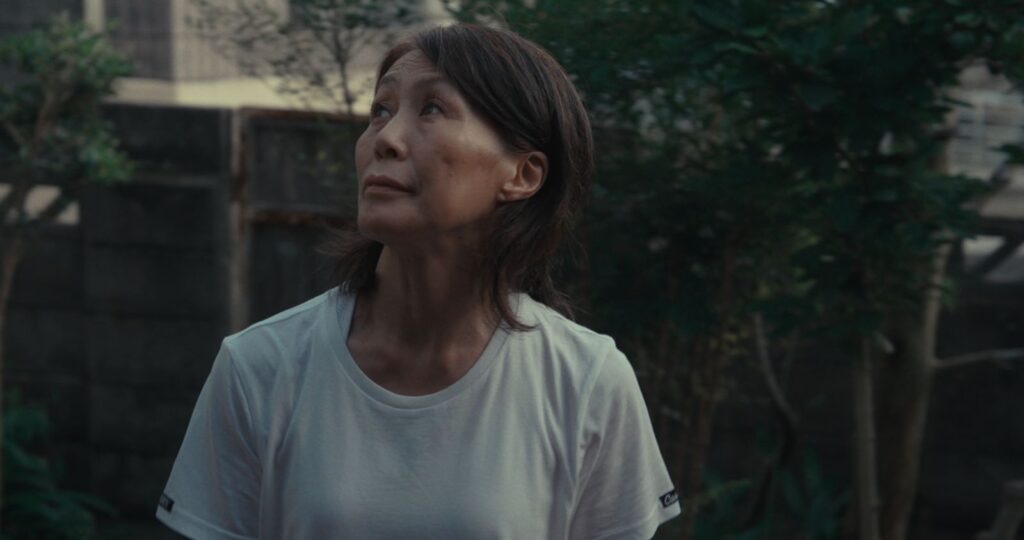
The Memory Palace: Or, If These Walls Could Talk
How films like Okuirmono, The Nest, and This House explore the histories embedded within the walls of our family homes. .

Exposing the Dark Truth of Digital Totalitarianism: Documentary 'Eyes of the Machine' Arrives in Prague as One World Film Festival Opens
Following its acclaimed premiere at IDFA Amsterdam, investigative documentary Eyes of the Machine screens at One World International Human Rights Documentary Film Festival in Prague, with Uyghur witness Kalbinur Sidik attending in person.